

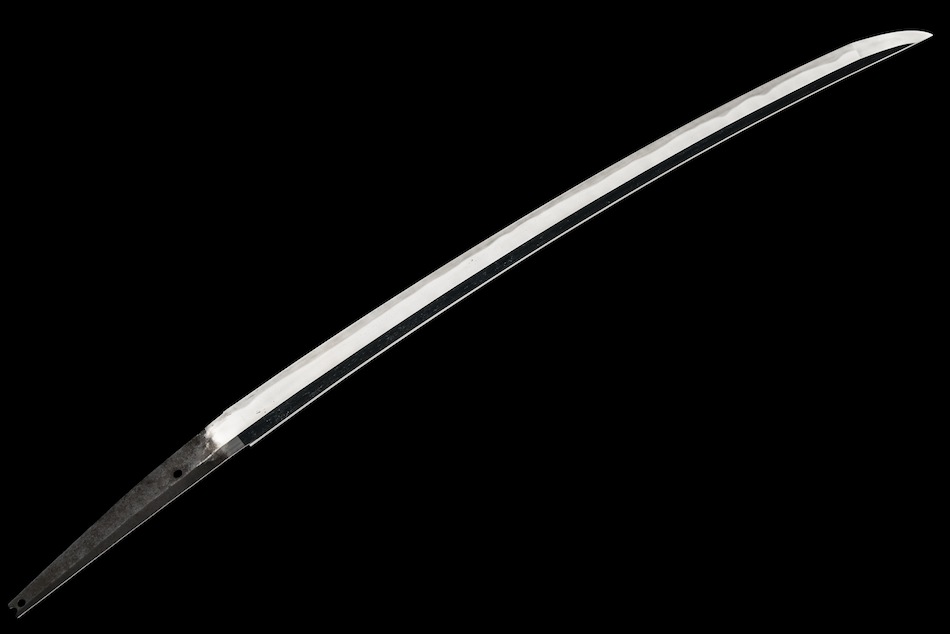
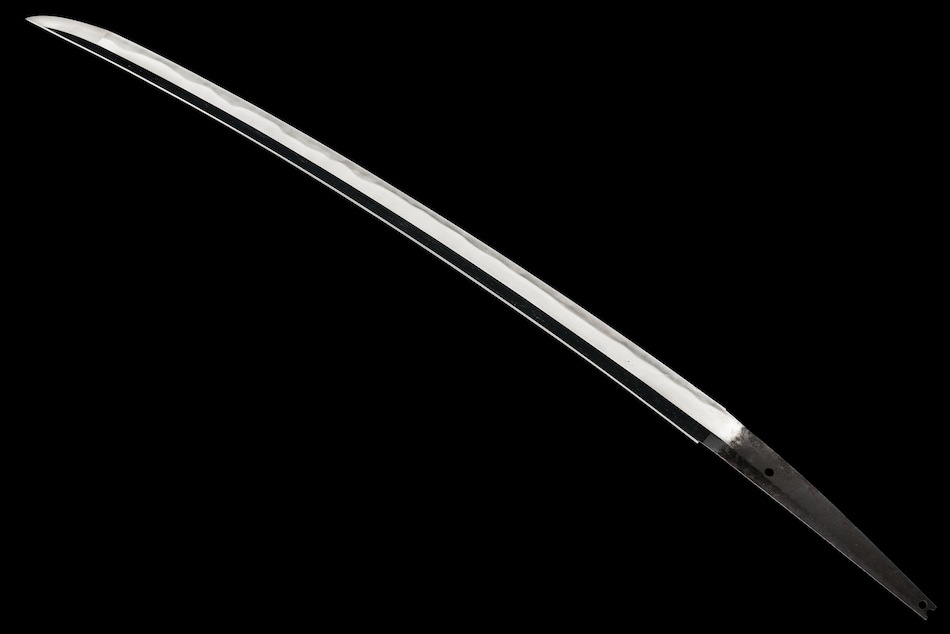
ujka114 – A Naoe Shizu School Katana (刀, 無銘, XXXX)
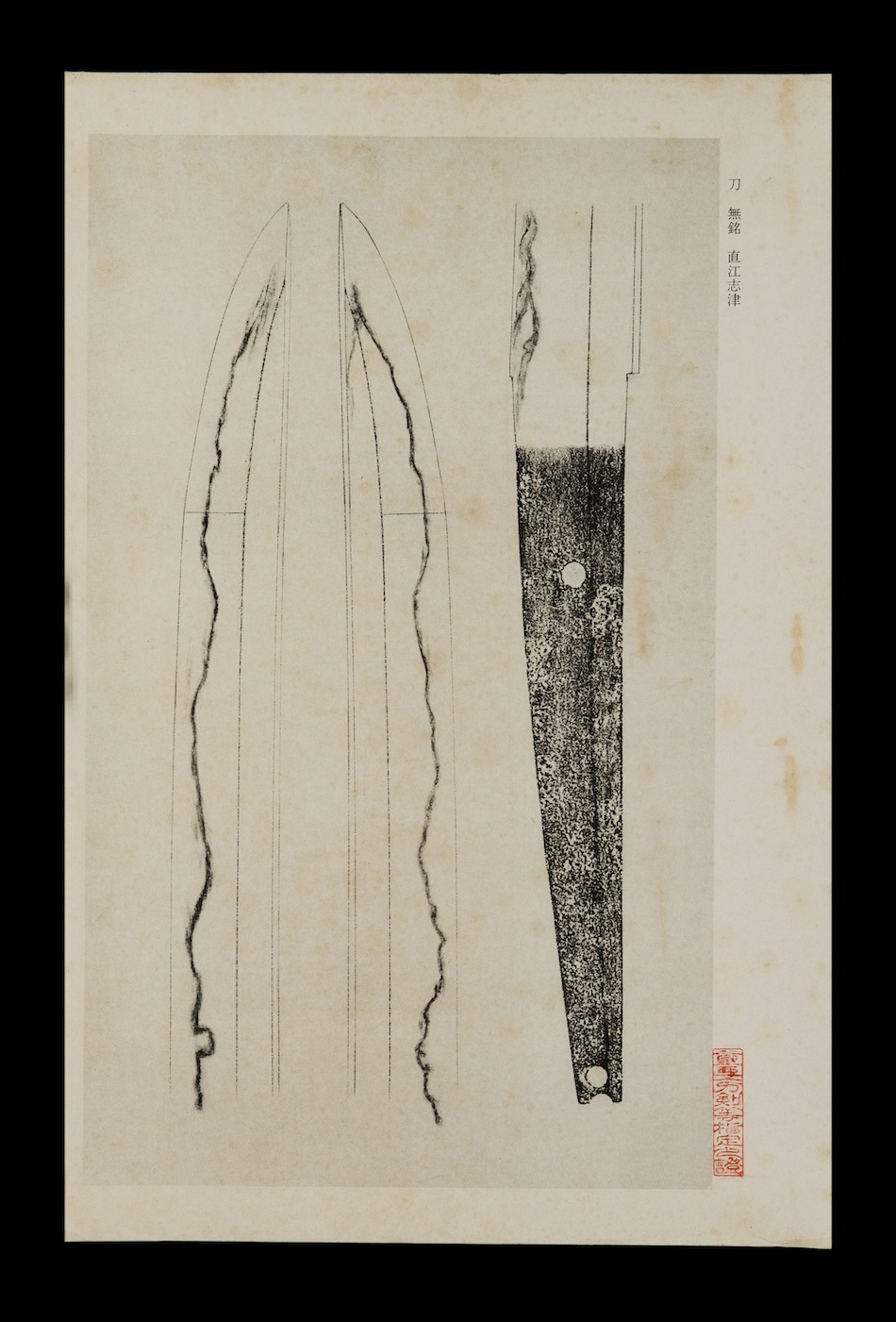
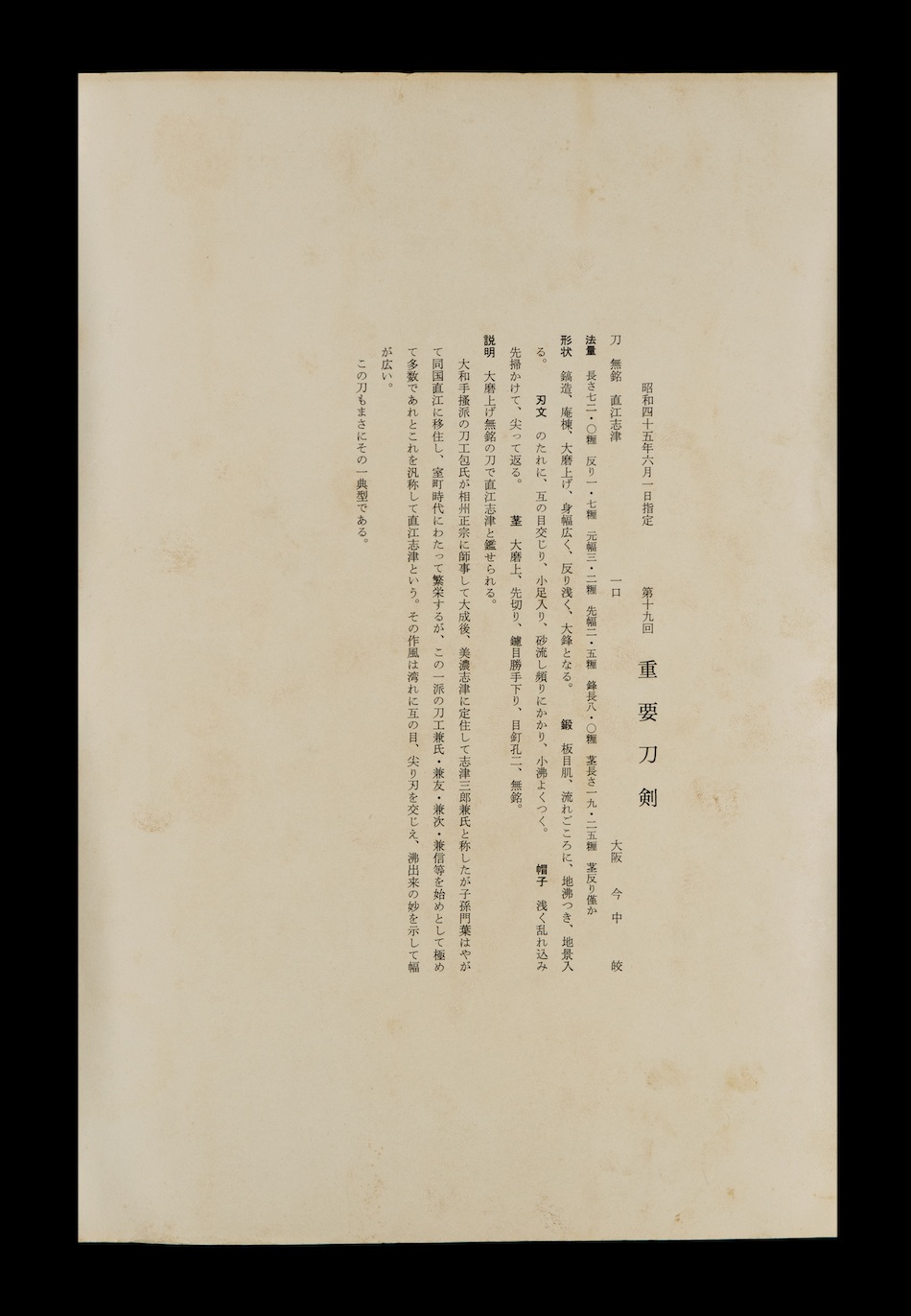
19th NBTHK Juyo Token
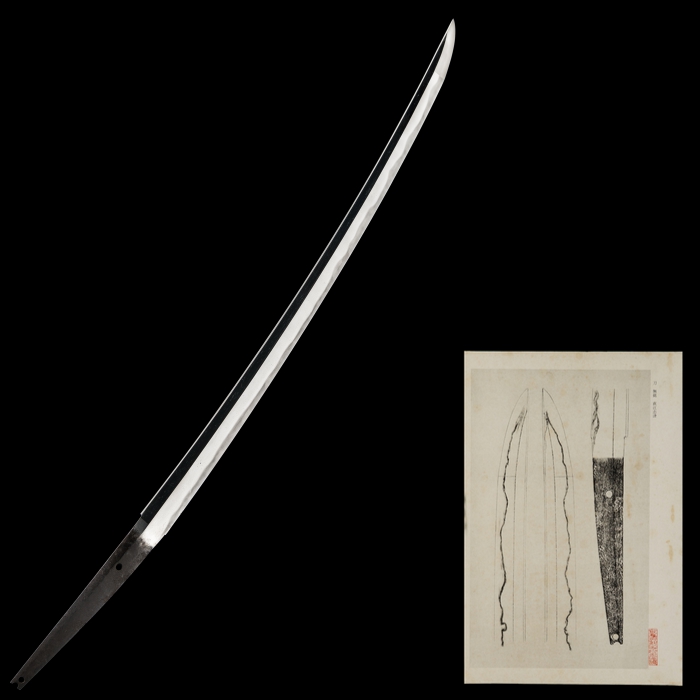
Item No.: ujka114
Type: Katana (o-suriage, originally a tachi)
Swordsmith: The Naoe Shizu School)
Location: Mino Province
Period: Middle Nambokucho period (1338~1367)
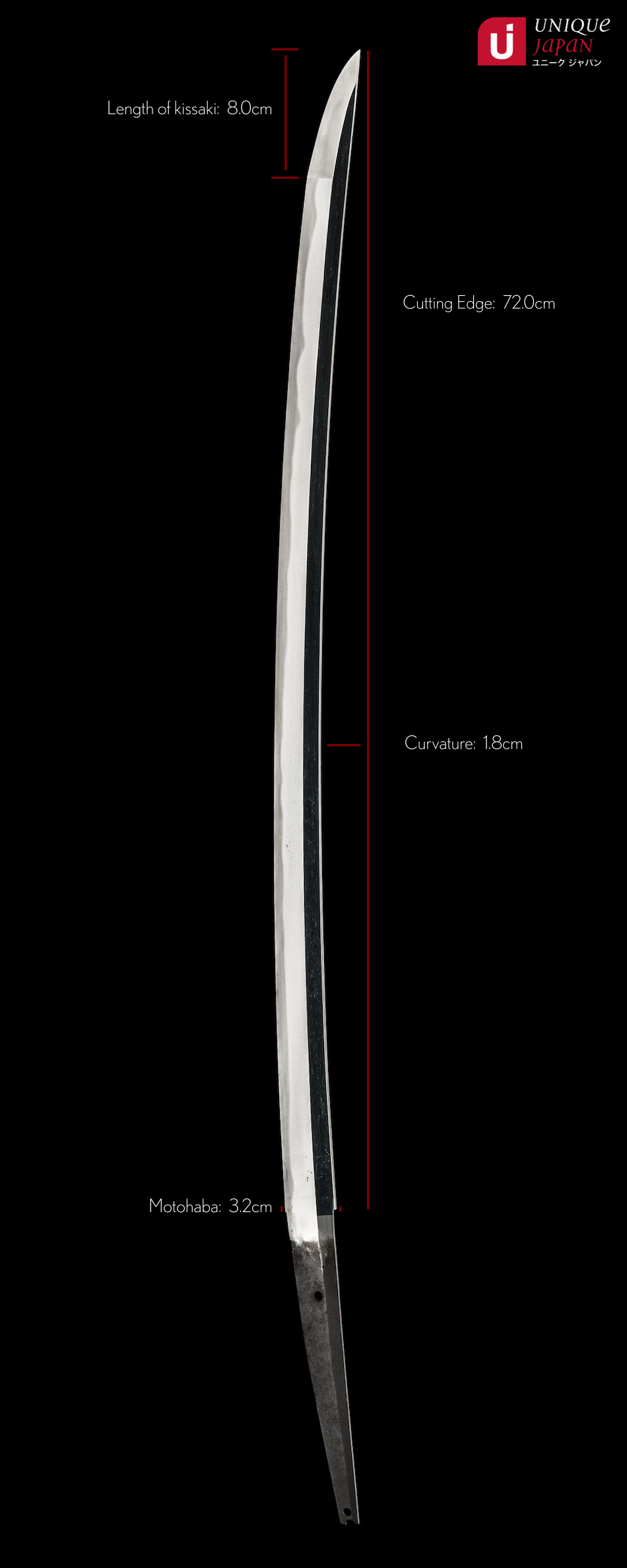
Length: 72.0cm
Curvature: 1.8cm
Motohaba: 3.2cm
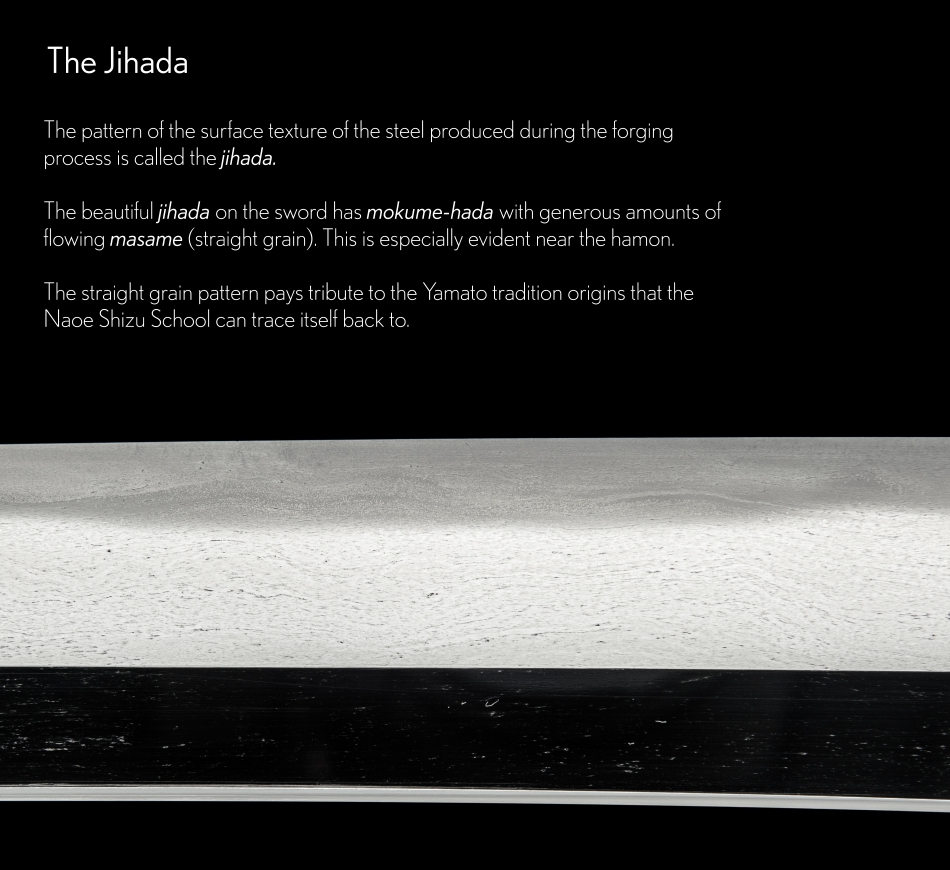
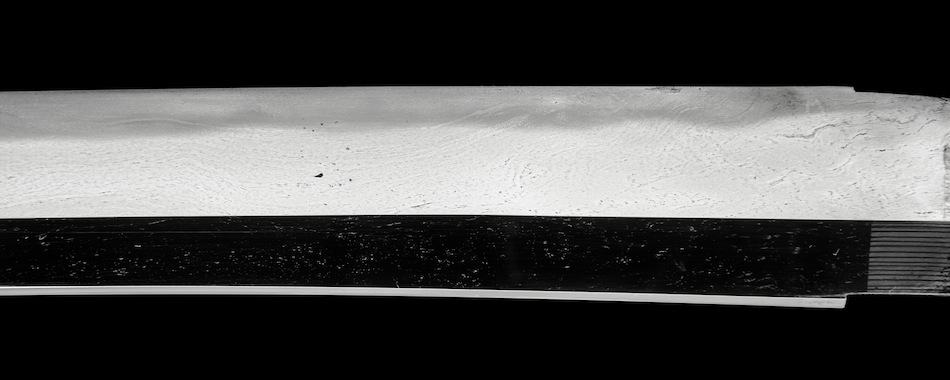
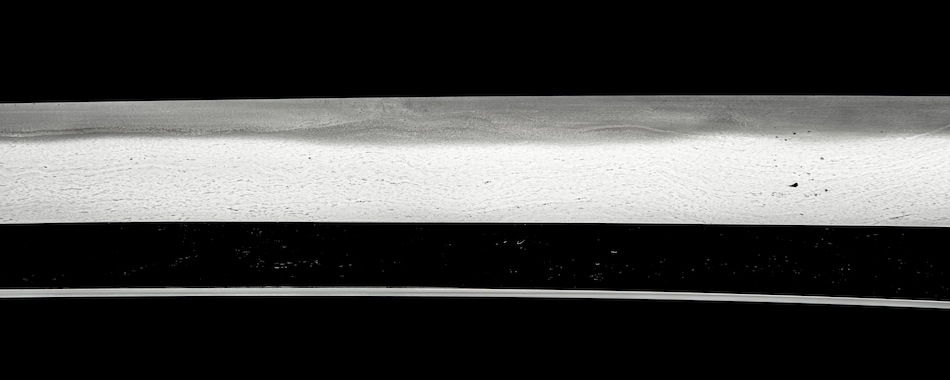
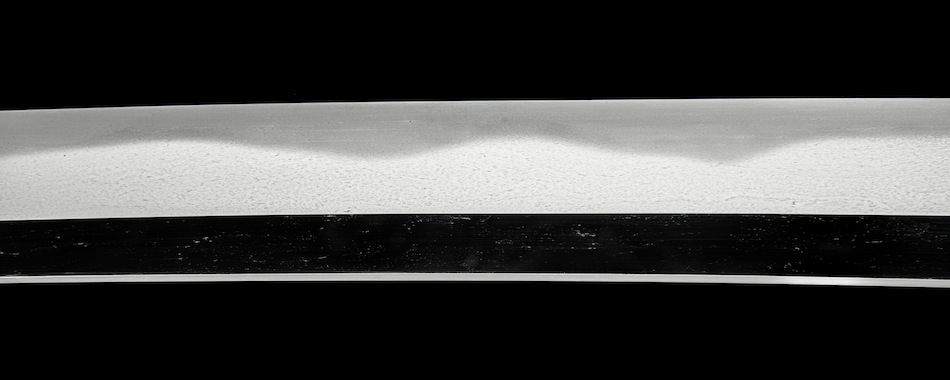
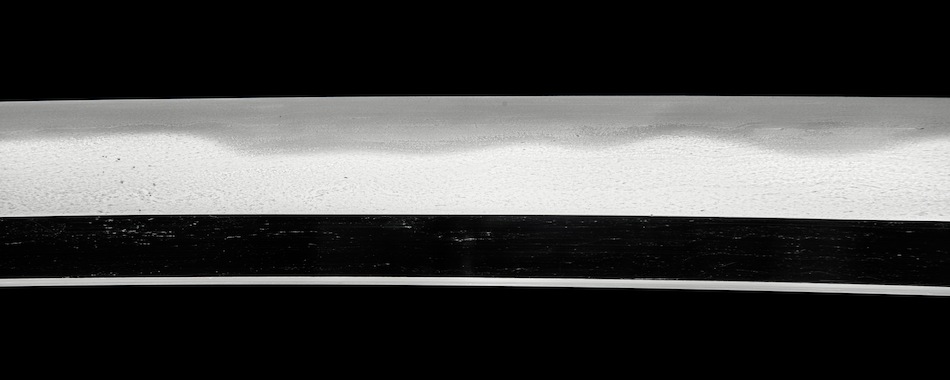
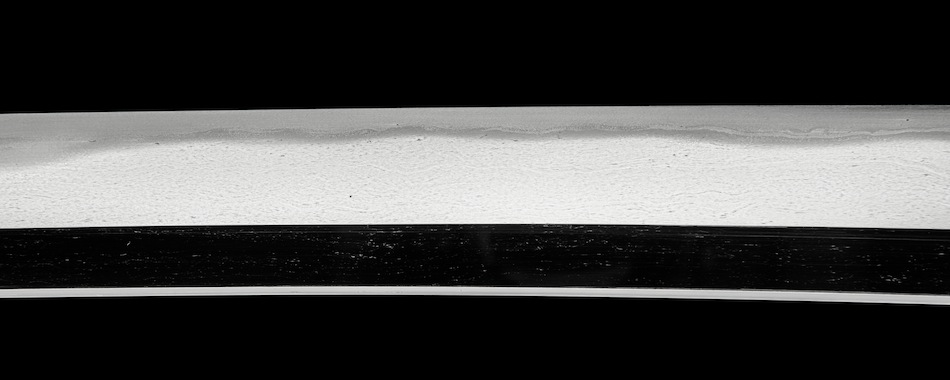
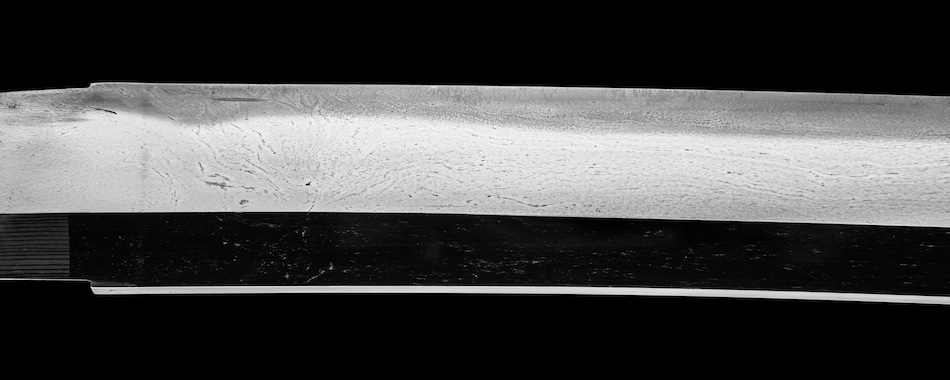
Jihada (surface skin): Nagaregokoro (itame mixed with masame), chikei
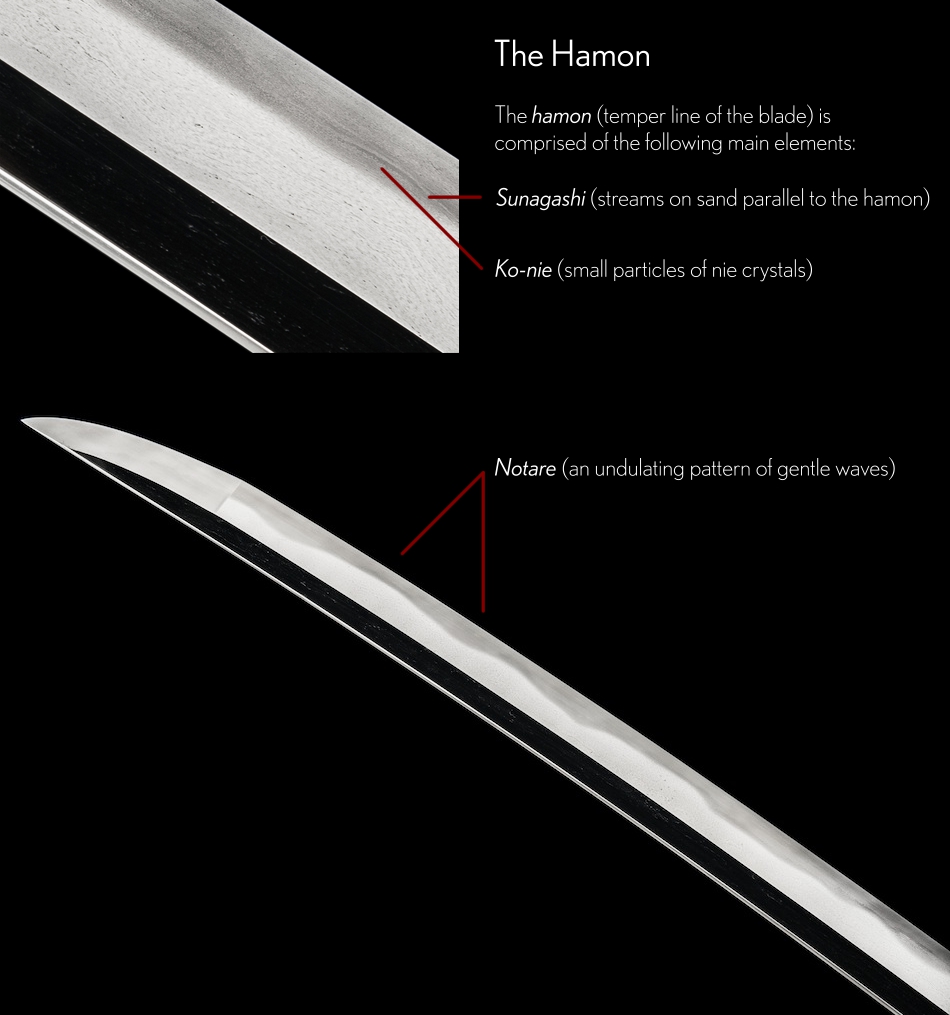
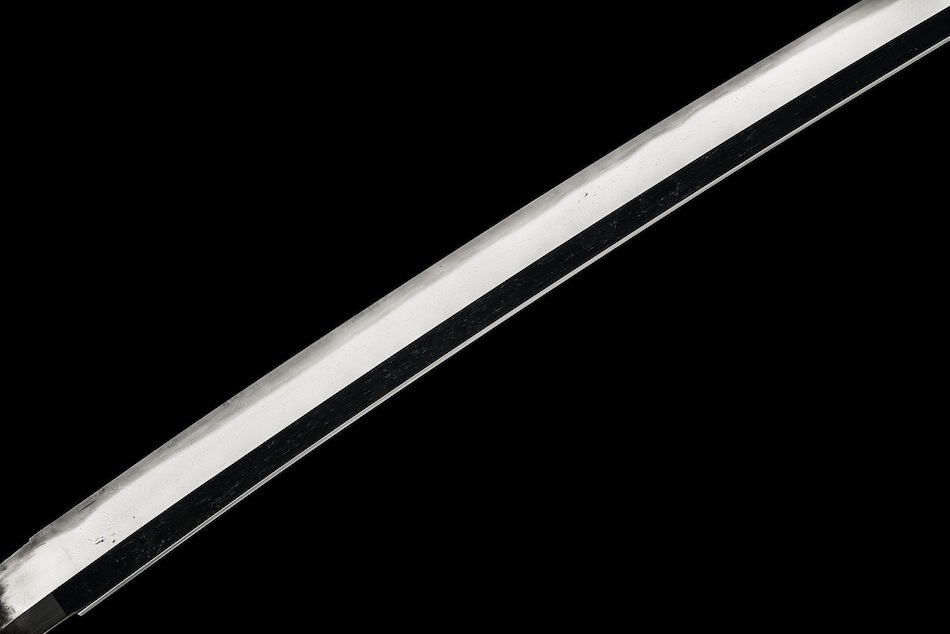
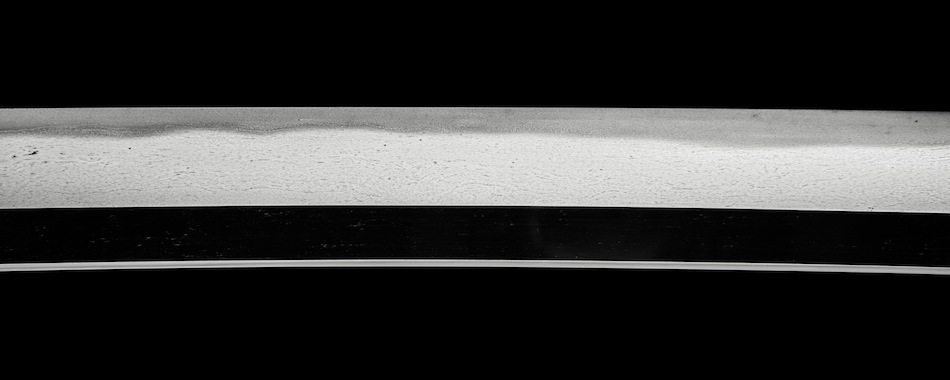
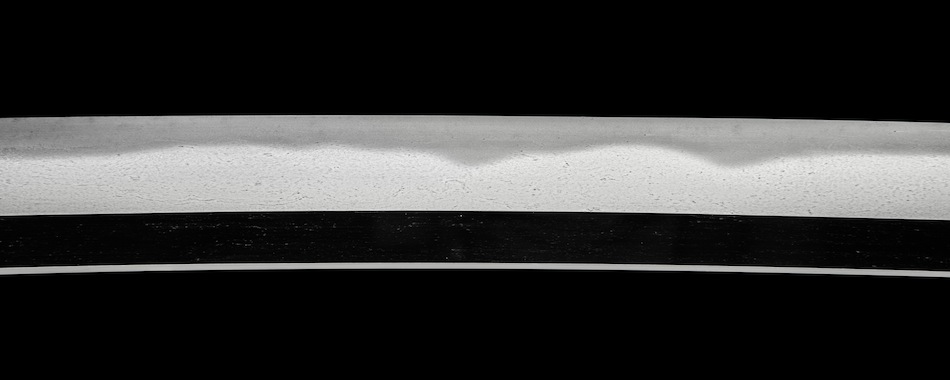
Hamon (temper line): Notare, gunome, koashi, sunagashi, ko-nie
Nakago (tang): o-suriage
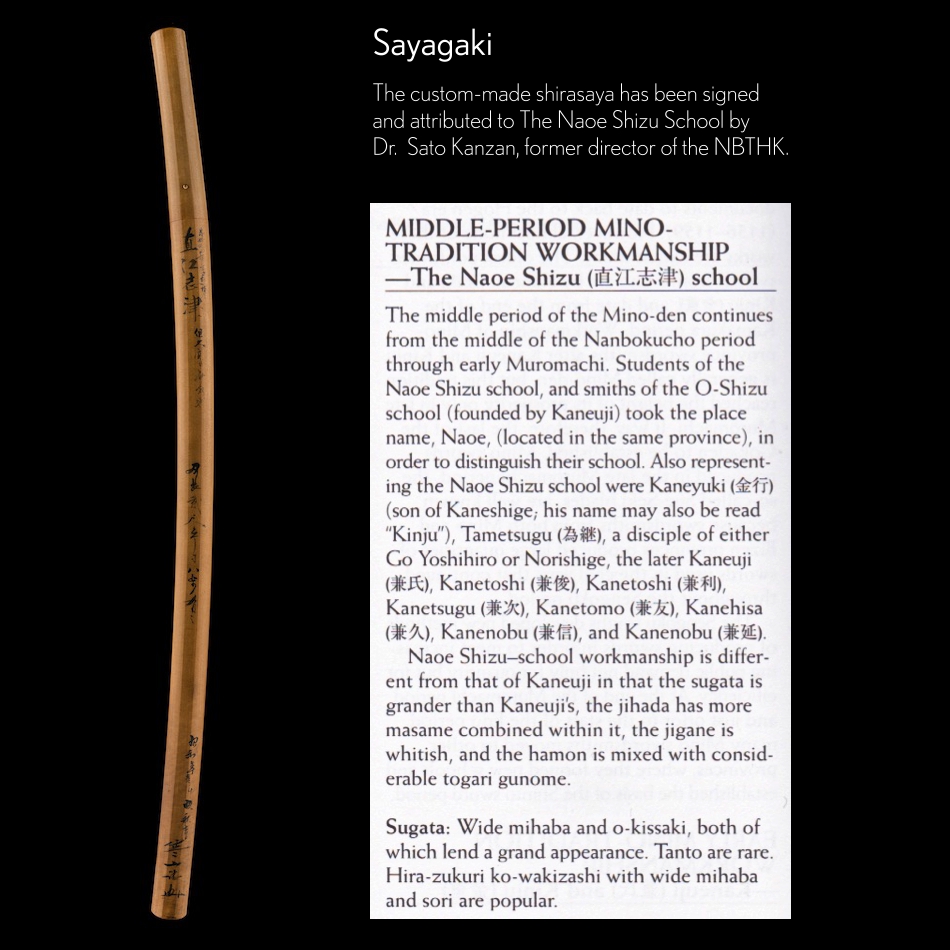
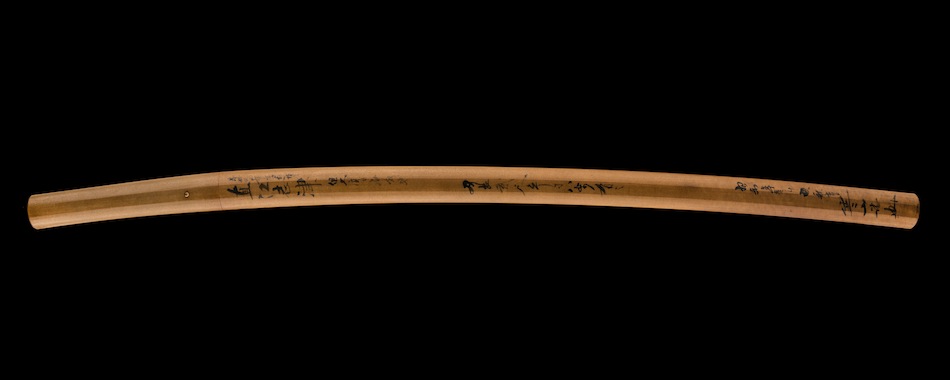
Sayagaki: By Dr. Kanzan Sato
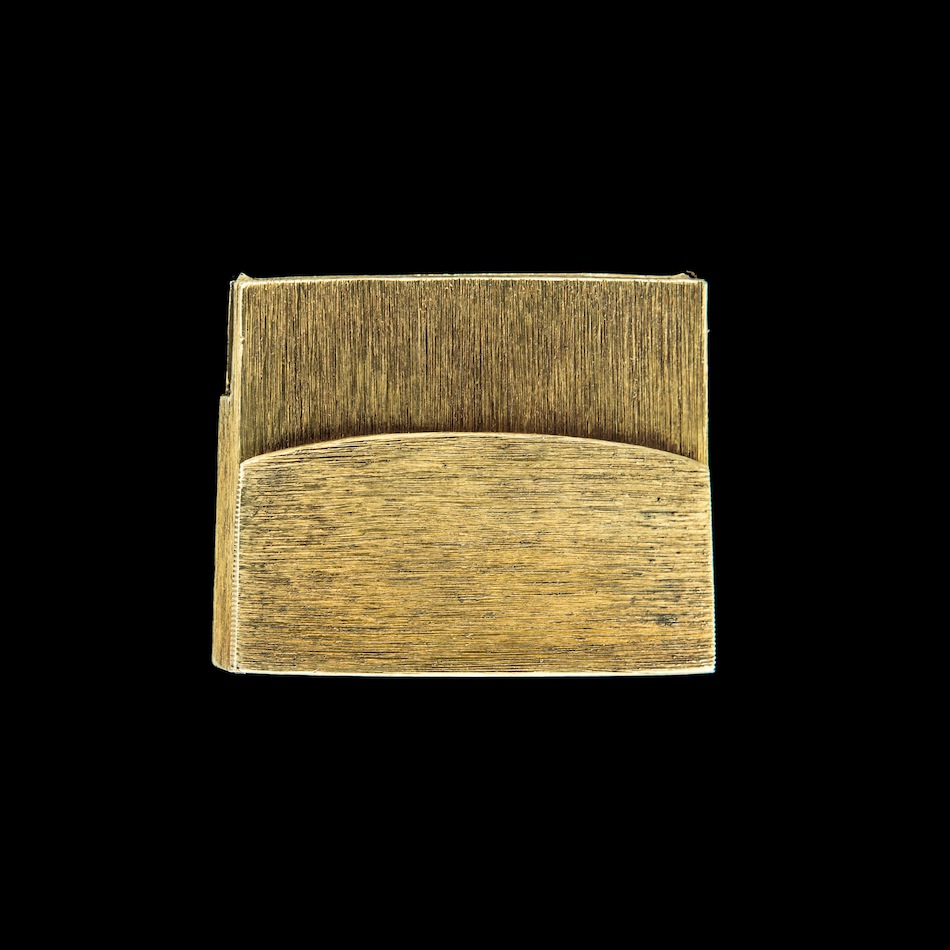
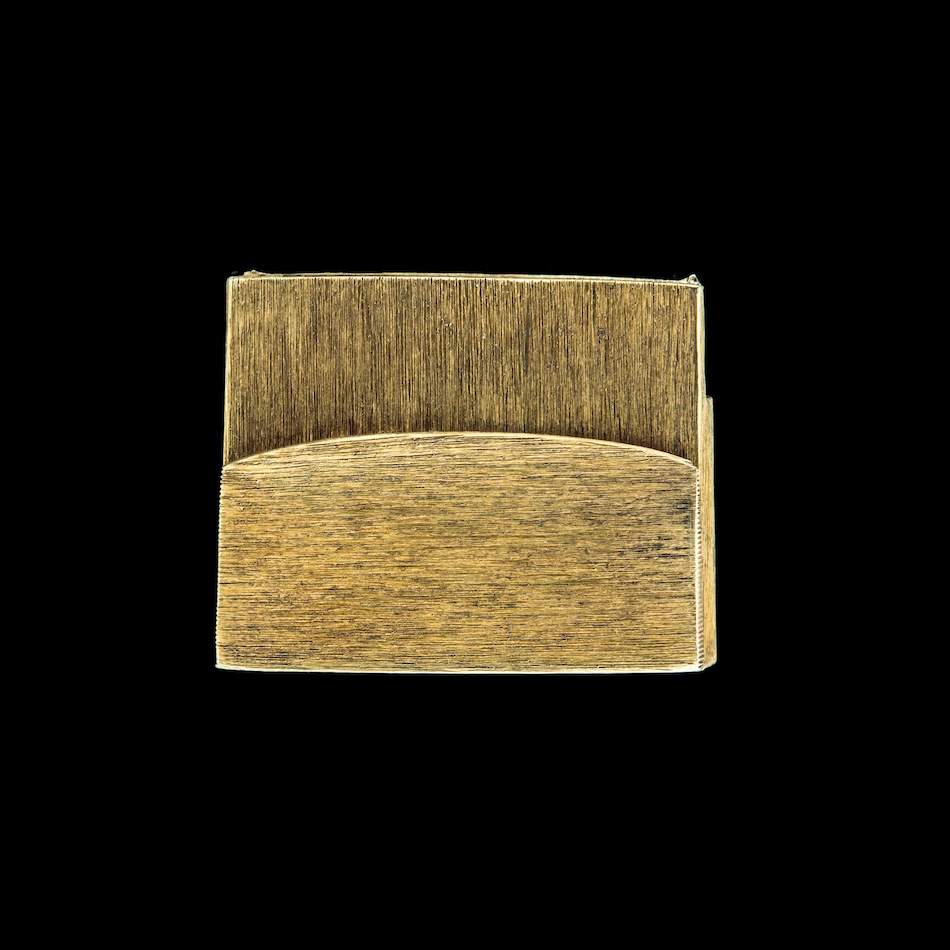
Koshirae: Custom handachi Higo koshirae Edo-period fittings
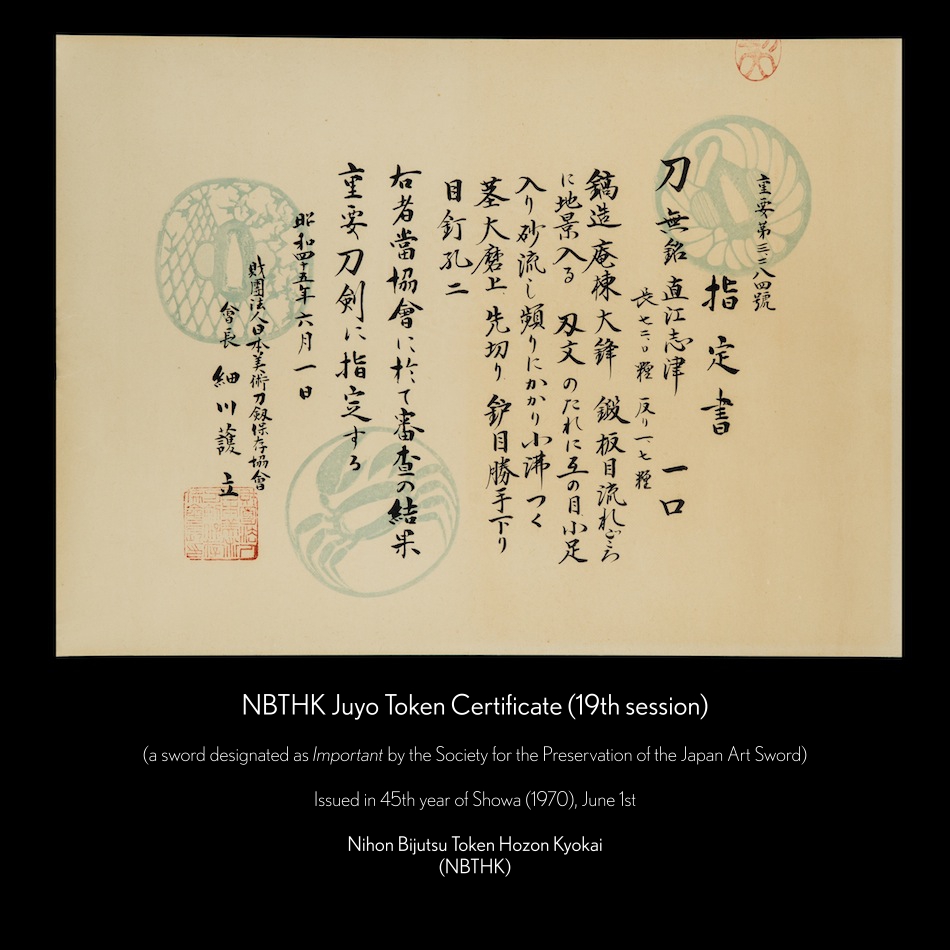
NBTHK Juyo Token Certificate (a sword designated as Important and Profound by the Society for the Preservation of the Japan Art Sword)
This sword has been SOLD
Overview
It gives us great pleasure to offer an NBTHK 19th Juyo Token katana (Important Sword) attributed to The Naoe Shizu School.
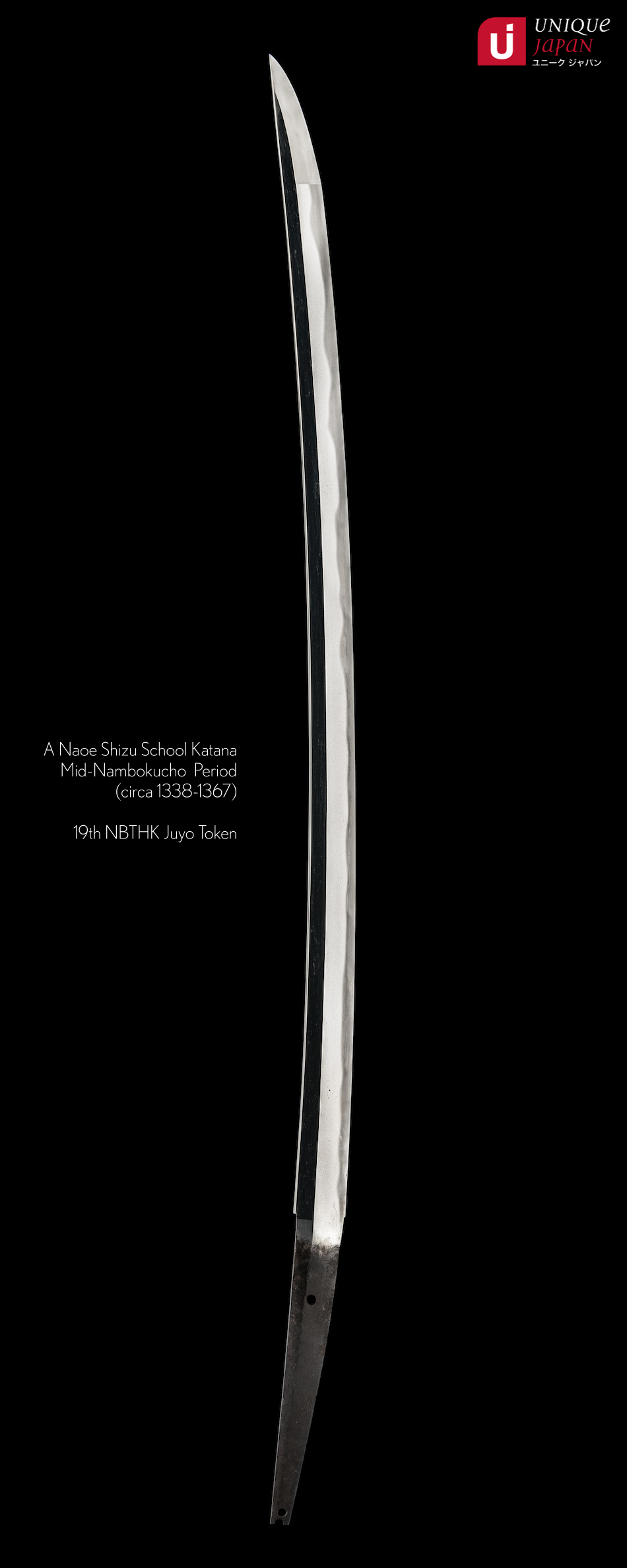
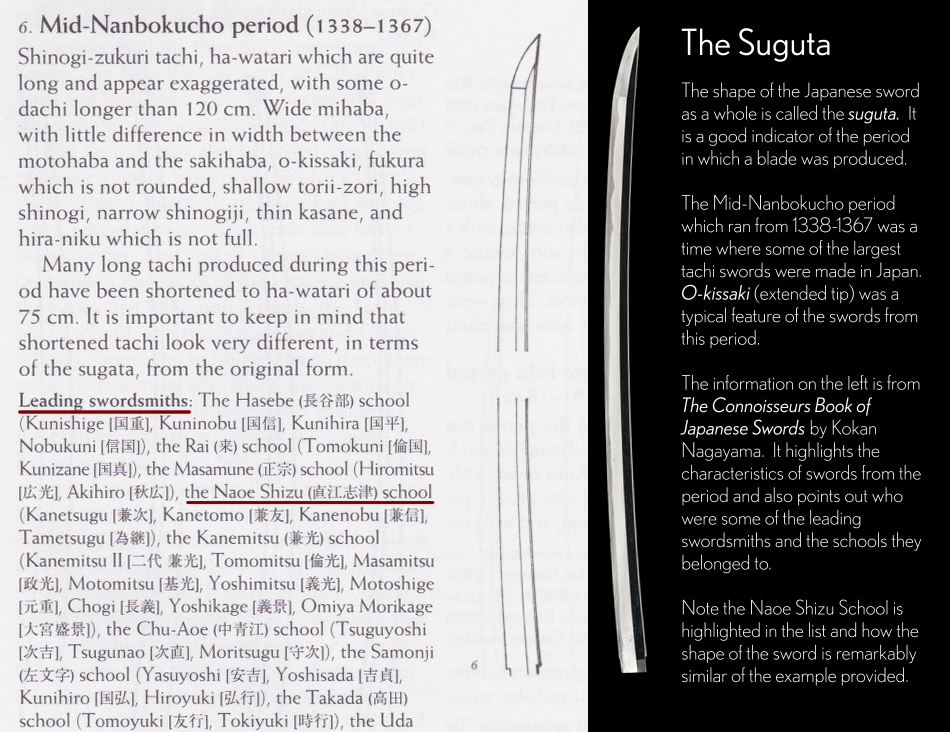
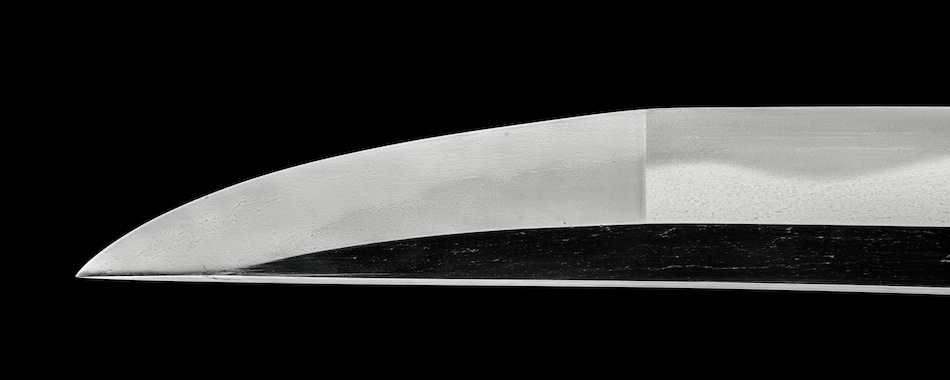
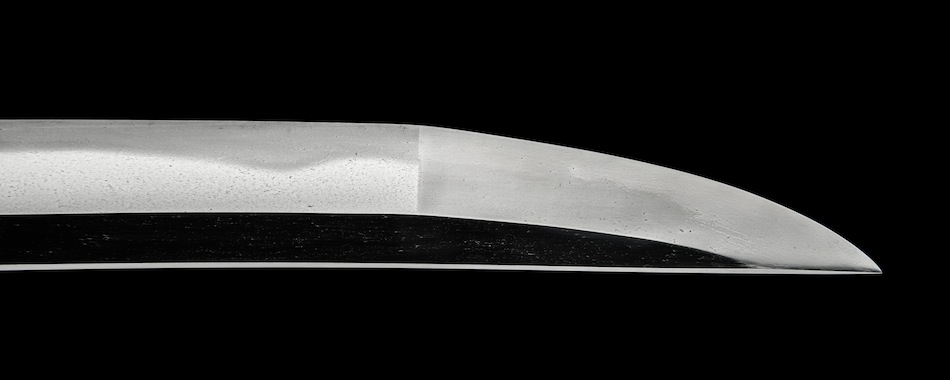
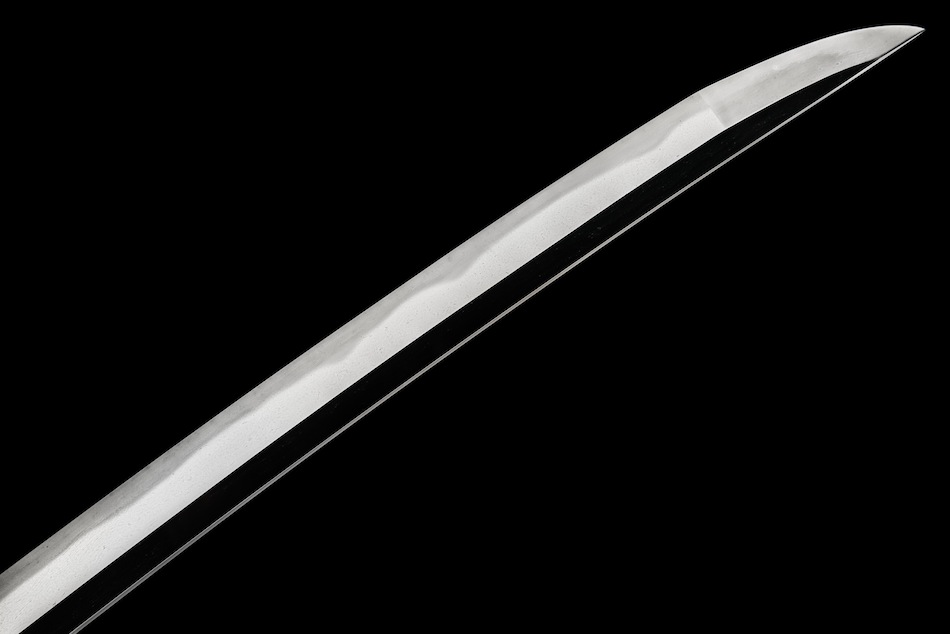
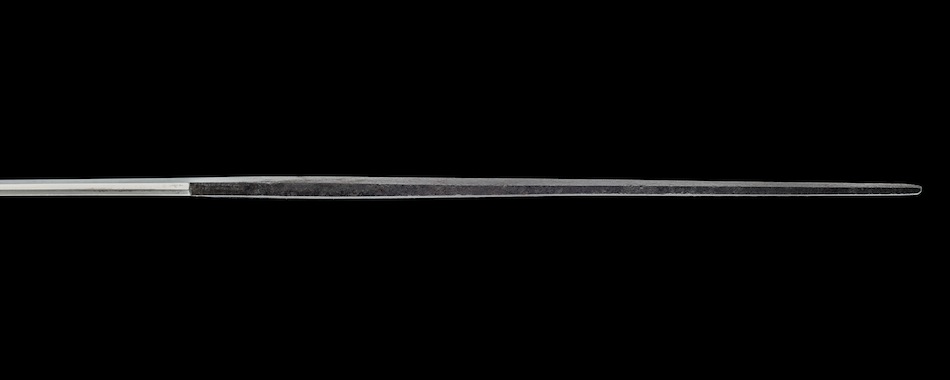
In a word, the sword is spectacular. Her remarkable o-kissaki (long extended tip) and majestic shape captures the imagination. This sword was once a tachi of course, a formidable sword surely carried during the warring mid-Nambokucho period (1338-1367).
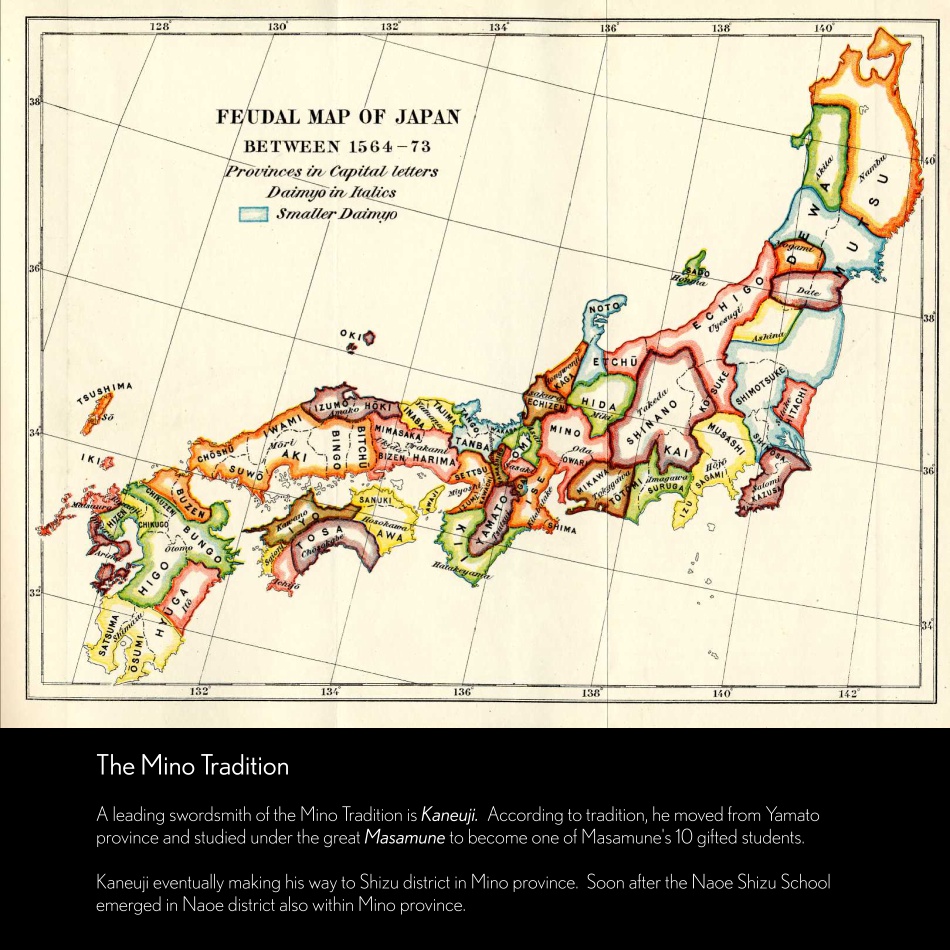
According to historical records swordsmiths populated Mino province in the Hogen era (1156-1159) during the Heian period. However, it’s only once the very late Kamakura period (early 1300s) appeared that works by Shizu Saburo Kaneuji and Kinju have been confirmed.
To give a sense of context, Kaneuji is said to have moved from Yamato (Nara) to study under the great Masamune to become one of his ten finest pupils (Masamune Jutettsu).
Kaneuji eventually moved to Shizu district in Mino province and is largely considered the founder of the Mino tradition. Incidentally, Shizu means ‘still’ or ‘calm’ in Japanese.
As one would have expected, Kaneuji’s works carry a strong mixture of Yamato Tegai School qualities (a jihada of mokume hada with straight grain masame hada) and the Soshu tradition with a hamon displaying nie-deki (large, visible crystals) with plenty of hataraki such as sunagashi (streaks of sand), kinsuji (stripes of gold) and inazuma (crooked lightning bolts).
A noteworthy difference is that is that the hamon carries some togari (tapered peaks) in the hamon. As a basic rule, all Mino tradition swords have togari in the hamon.
Unsigned swords attributed to Kaneuji are known as Yamato Shizu (Shizu meaning ‘Kaneuji’).
The Naoe Shizu School
In the beginning, students of the O-Shizu School (founded by Kaneuji) and of the Naoe Shizu School moved to Naoe district also in Mino province to differentiate themselves.
In the beginning, students of the O-Shizu School (founded by Kaneuji) and of the Naoe Shizu School moved to Naoe district also in Mino province to differentiate themselves.
Notable students include Kaneyuki (son of Kaneshige), Tametsugu (a disciple of either Go Yoshiro or Norishige), Kanetoshi, Kanetsugu, Kanenobu and later generations of Kaneuji.
What makes the Naoe Shizu School different from that of O-Shizu is that the sugata (shape of the sword) is superior; key traits being that of a wide mihaba and o-kissaki. Both of which, according to Nagayama Kokan of the Connoisseurs Book of Japanese Swords, “lend to a grand appearance”.
Of equal importance to note is that the jihada has mokume-hada with generous amounts of flowing masame (straight grain). This is especially evident near the hamon or in the shinogi-ji.
The folding pattern in the steel has a direct influence on the hamon – displaying sunagashi (parallel streaks of sand) in a wavy notare hamon. All such qualities of the Naoe Shizu School can be seen and enjoyed in this magnificent katana.
To the collector, the fact that this katana was granted NBTHK Juyo certification in 1970 is highly significant. Juyo blades judged prior to 1971 are considered to be more prestigious because there was no higher ranking at the time (NBTHK Tokubetsu Juyo did not yet formally exist).
Swords awarded Juyo Token from this extremely selective period were of the absolute top rank and are thus highly coveted. In a nutshell, this katana was the Tokubetsu Juyo of its day.
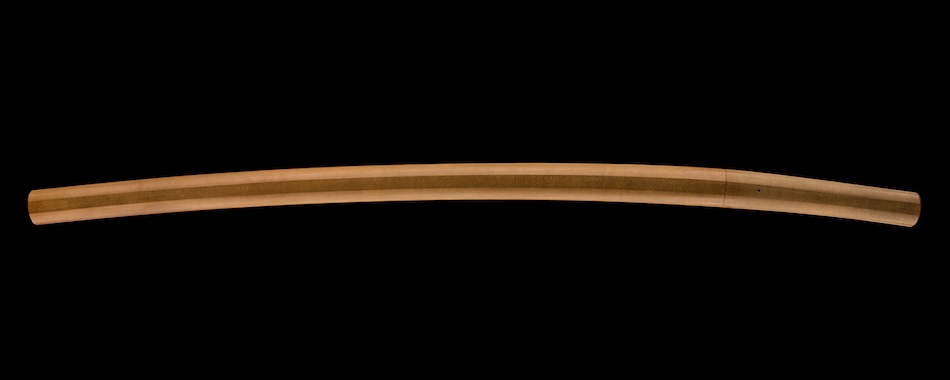
Former co-chairman of the NBTHK, Dr. Sato Kanzan, has further signed the 72cm sword’s shirasaya (scabbard). This is a further level of respected authentication known as sayagaki.
All told, this is a katana of museum-grade importance. It is a remarkable piece of Japanese history that will give its new owner endless enjoyment and appreciation.
SOLD
Information on acquiring a sword from Unique Japan:
5 Steps to Owning an Authentic Japanese Samurai Sword
5 Steps to Owning an Authentic Japanese Samurai Sword
*Photos by Eric Bossick for Unique Japan

If this sword is of serious interest to you, please inquire to its availability and we’ll contact the owner to see if they are willing to part with their piece.
Interested in Ownership of an Antique Japanese Sword?
If owning an authentic Japanese Samurai sword is of interest to you and your family, we would be honoured to serve you. Given the very personal nature of collecting Japanese swords, the majority swords that we acquire are sold privately to long-term clients.
Please join our VIP email list to gain exclusive access to present and future swords and catalogues.
To visitors in Japan…
If you have the pleasure of living in Japan or visiting the country, we recommend that you schedule a private VIP meeting with us.
VIP meetings are held at our studio near JR Ebisu and Meguro stations. We can also arrange visits to a hotel, however, it’s generally easiest at our studio where more stock can be presented to the client.
We look forward to serving you.