
ITEM# UJTA075 – In Studio
A Hôshô Gorô Tantô (保昌五郎)
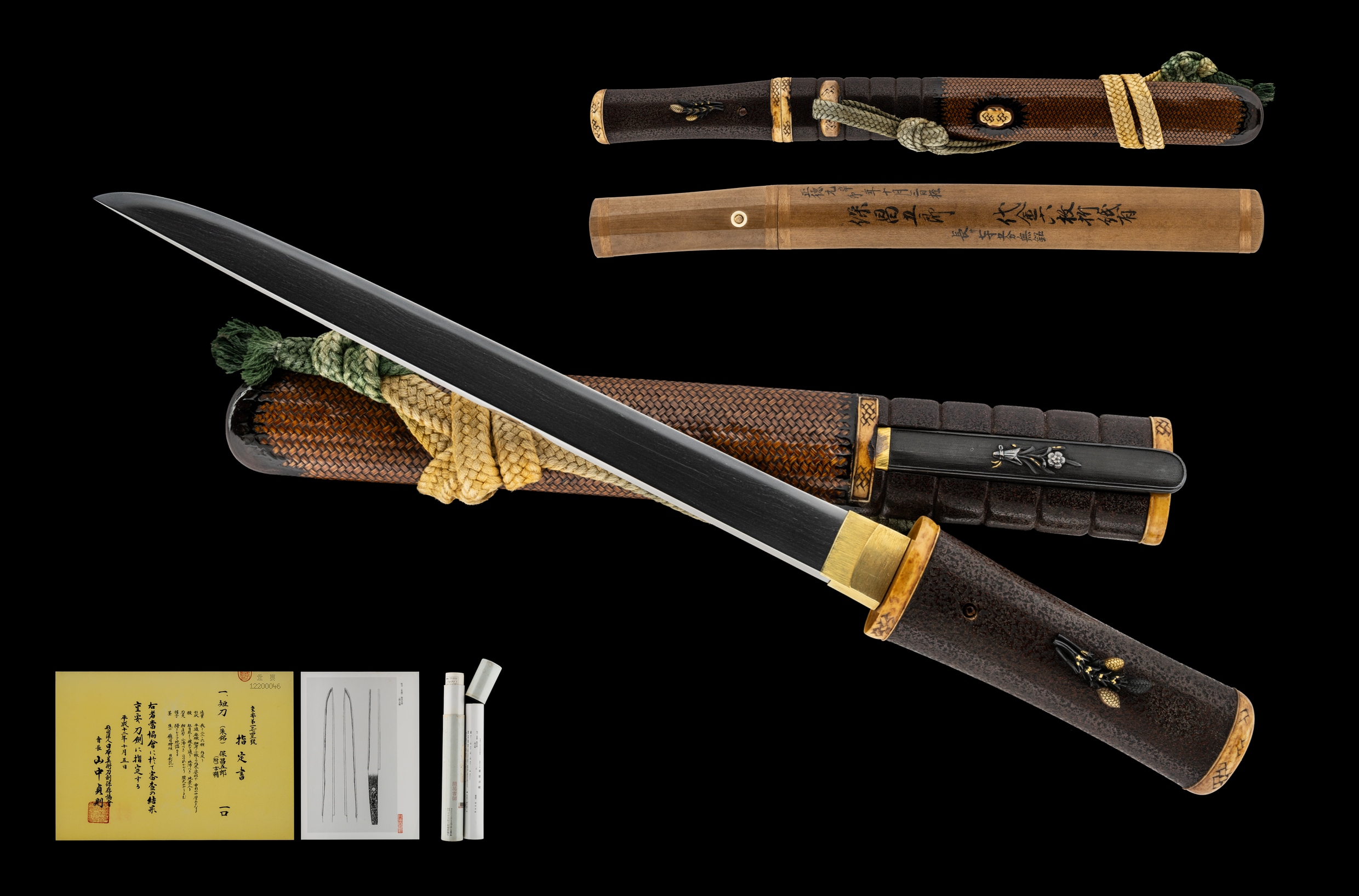
- 46th NBTHK Jûyô Tôken (2000)
- Kotô, late Kamakura ~ Nanbokuchô (c. 1300-1392)
- Hôshô school, Yamato
- Nagasa 22.6cm
- Exquisite masame-hada
- Origami by Hon’ami Kôchû (1711)
In our studio in Japan now, with the full PDF description to follow. This is the ideal time for extras such as an NBTHK or NTHK-NPO submission for the koshirae, or a sayagaki from Tanobe-sensei or Nozomi-san, which will be reflected in the final price. Enquire for a chance to place it on hold.


This is a beautiful and rare opportunity to own a Jûyô Tôken tantô from the Hôshô school, the most distinctive of the five schools of Yamato. Designated at the 46th Jûyô shinsa in 2000, this slender tantô is signed in red lacquer Hôshô Gorô, the name used by the school’s leading smiths, and has everything that makes the school unmistakable: a clearly running masame-hada, a hoso-suguha in ko-nie with fine hotsure, a hakikake boshi and a bluntly cut butsugiri nakago. The old shirasaya carries a sayagaki recording an origami by Hon’ami Kôchû in 1711, valuing the blade at six mai. The aikuchi koshirae, with horsetail menuki and a plum blossom kozuka in silver and gold, is wonderful complement that is worthy of submission to the NBTHK.
NBTHK Remarks (Zûfû)
The Hôshô school (保昌派) was based in Takaichi district, Yamato province, and flourished from the late Kamakura period into the Nanbokuchô period. The school’s leading smiths, Sadamune (貞宗) and Sadayoshi (貞吉), are both said to have used the name Hôshô Gorô (保昌五郎), and other accomplished smiths of the school included Sadakiyô (貞清), Sadaoki (貞興) and Sadamitsu (貞光). Stylistically, the school is characterized by a jigane showing masame-hada throughout, higaki-yasurime on the nakago, and a bluntly cut nakago tip, making it the most distinctive of the Yamato Goha (the Five Schools of Yamato province).
This tantô is accompanied by an old shirasaya, whose sayagaki records that in the first year of the Shôtoku era (1711), it received an origami (an authentication certificate) from Hon’ami Kôchû (本阿弥光忠) attributing it to Hôshô Gorô, valued at six mai. Given that the quality of the jigane and hamon, along with the shape of the nakago, are typical of the school, the “Hôshô Gorô” attribution here seems better understood not in its literal sense but rather as designating a representative, superior work of the Hôshô school; indeed, this small-sized shape brings to mind Sadakiyô or Sadaoki more than Sadamune or Sadayoshi themselves.
Blade
| Item Number | UJTA075 |
| Sword Type | Tantô |
| Attribution | Hôshô Gorô (shumei, red lacquer signature) |
| Swordsmith (JP) | 保昌五郎 |
| School | Hôshô school (Yamato Goha) |
| Province | Yamato |
| Period | Kotô – Late Kamakura ~ Nanbokuchô period (c. 1300-1392) |
| Nagasa | 22.6 cm |
| Sori | Uchizori |
| Moto-haba | 1.9 cm |
| Shape | Hira-zukuri, iori-mune, slender and small-sized, kasane somewhat thick for the width |
| Nakago | Ubu, butsugiri tip, higaki-yasurime, 1 mekugi-ana, 10.0 cm, no nakago-sori; shumei in red lacquer below the mekugi-ana on the sashi-omote |
| Jihada | Well-forged, clearly running masame-hada, ji-nie, chikei |
| Hamon | Hoso-suguha in ko-nie with fine hotsure, nioiguchi somewhat urumi toward the koshimoto |
| Boshi | Hakikake, yakizume |
Koshirae
| Koshirae | Aikuchi koshirae, textured lacquer tsuka and saya, saya wrapped in fine golden brown weave; could potentially be submitted to the NBTHK |
| Menuki | Sprigs of horsetail |
| Kozuka | Plum blossom in silver and gold, nanako ground |
| Habaki | Gold habaki |
Certificates and Sayagaki
| Certificates | NBTHK Jûyô Tôken (46th Jûyô shinsa, designated 5 October 2000), with furuzaya listed as tsuketari |
| Sayagaki | Inscribed on the old shirasaya (furuzaya), recording an origami by Hon’ami Kôchû for Hôshô Gorô, valued at six mai, dated the first year of Shôtoku era (1711) |
What’s included
| Includes | Old shirasaya, tsunagi, aikuchi koshirae with kozuka, silk wrapping cloths, brocade bag, Jûyô certificate and papers |