
Koshirae can be described as the ‘outfit’ or ‘furniture’ or ‘battle mounts’ for Japanese swords. Many Japanese swords are initially housed in shirasaya only – the brown storage scabbard that we affectionately call the humidor for Japanese swords. At Unique Japan, we specialize in building custom koshirae for such swords. In fact, we produce more custom koshirae than any other sword dealer in Japan. All work is completed by top-level craftsmen in Japan and by doing so we keep these incredible traditions alive and well. Featured here is just a sample of the dozens of custom koshirae (and daishô koshirae) projects we have produced for clients over the years. Clients typically acquire a sword from us in shirasaya, then we create an authentic koshirae using quality antique fittings. Browse this growing gallery for inspiration on your next project.
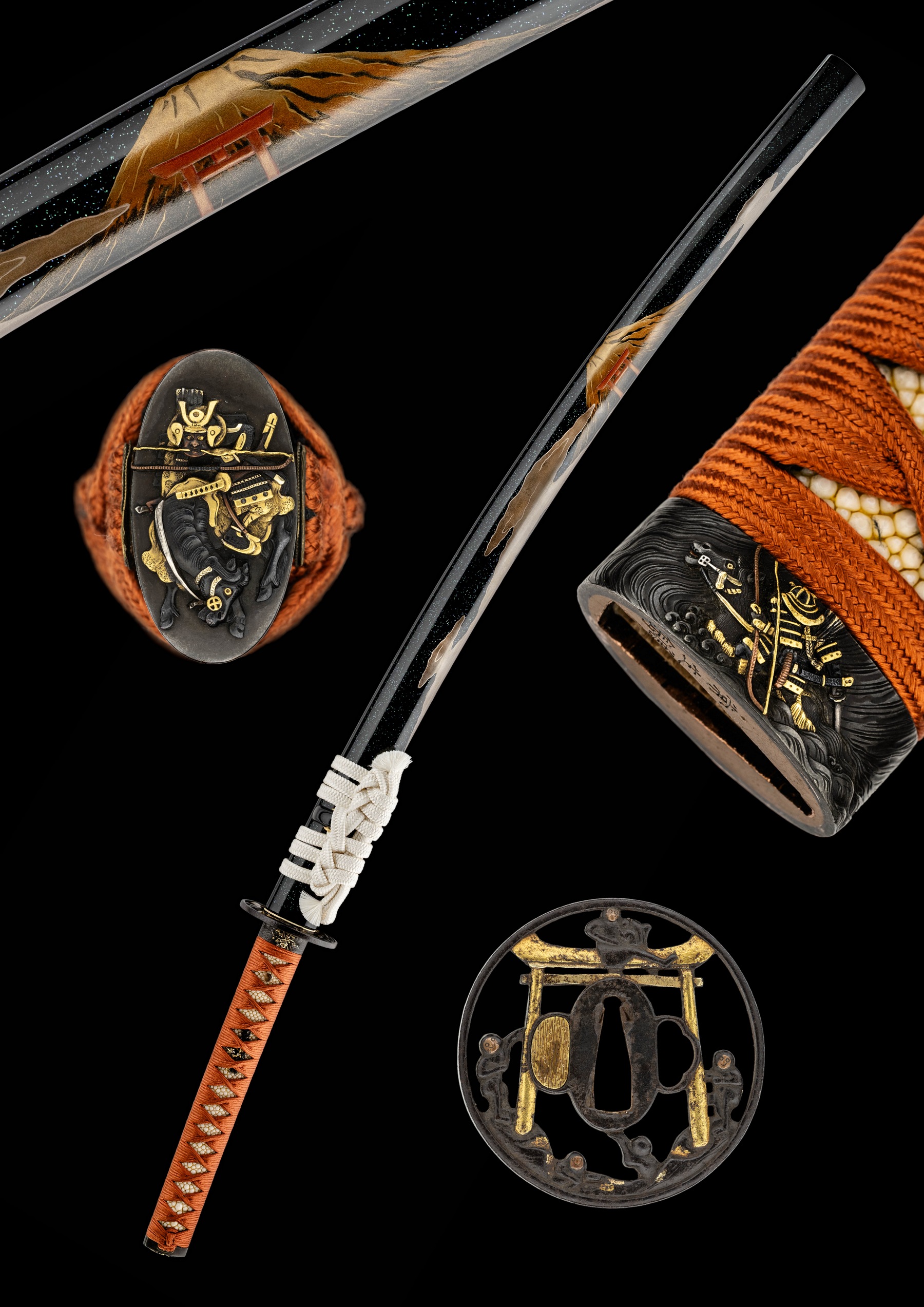
Shintô · Mid Edo period (Genbun era: August 1739)
A Yasusada Katana (安貞)
A beautiful custom koshirae that features a gorgeous zen-themed maki-e artwork of Mount Fuji and Uji river battling samurai. A beautiful custom koshirae that features a gorgeous zen-themed maki-e artwork of Mount Fuji and Uji river battling samurai.
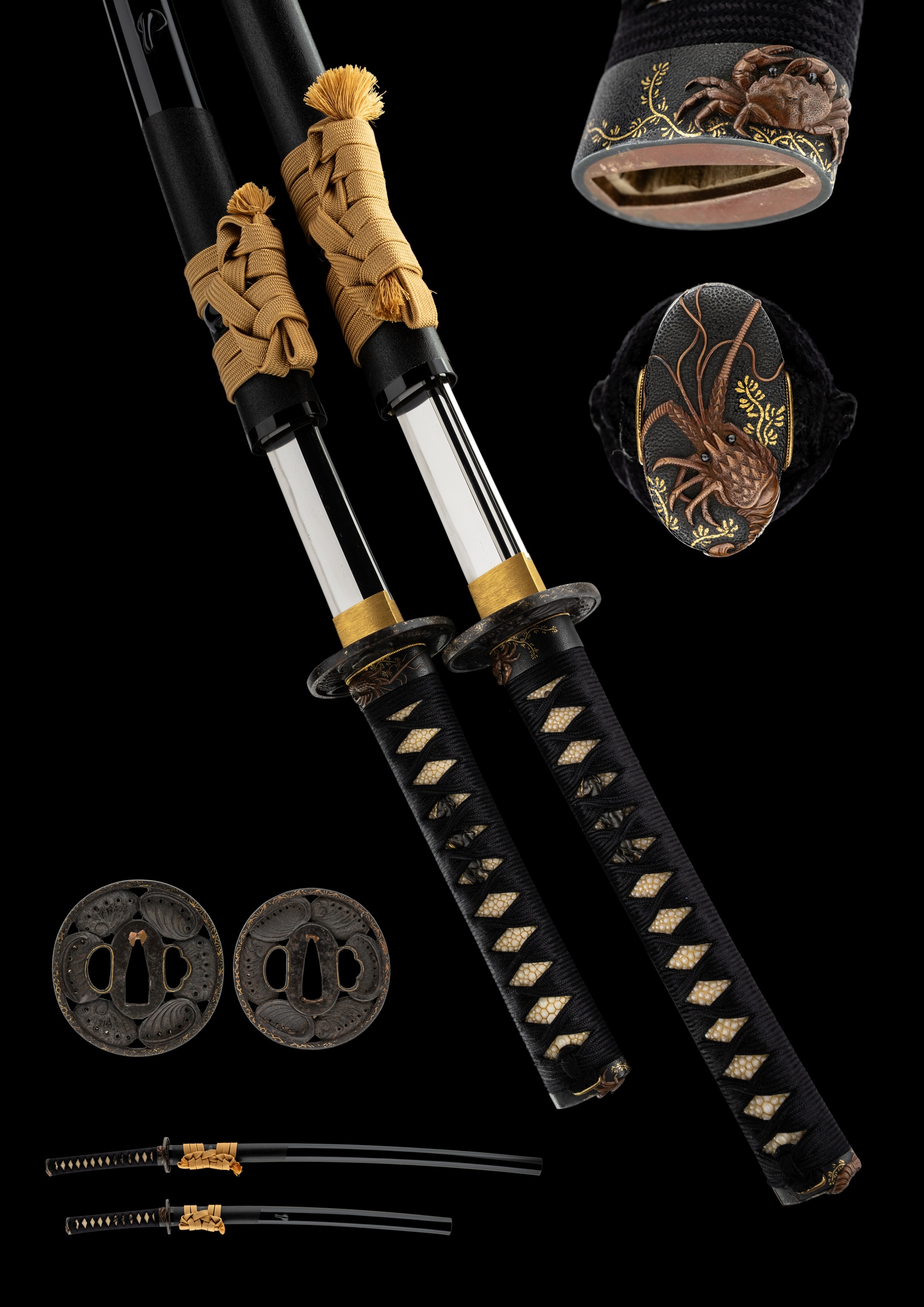
Chû-Kotô · Late Kamakura ~ Nambokuchô (1288~1342)
A Shikkake School Daishô (尻懸)
A land and sea themed daishô koshirae built for two Chû-Kotô blades from the Shikkake school – one of the five great Yamato traditions. Abalone tsuba by the Echizen school, lobster and crab fuchi-kashira by Akita Shôami, and saya lacquered in two tones of black with gold sageo, inspired by the client’s New Zealand heritage.
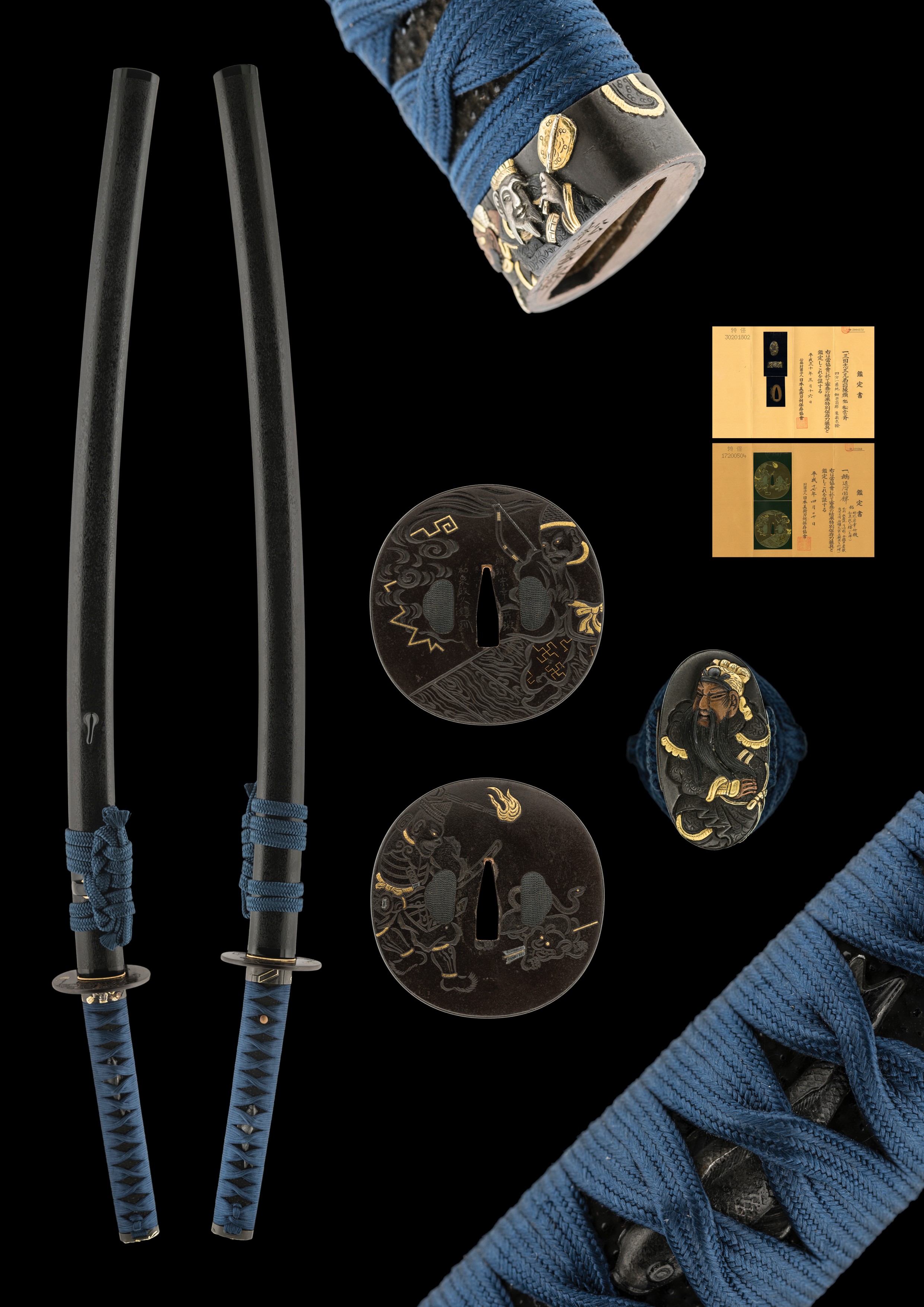
Gendaitô · Shôwa era (1971)
An Amata Akitsugu Katana (天田昭次)
A custom koshirae centred on a remarkable Myôchin Muneyuki and Izumi Masahisa collaborative tsuba depicting the Nue-slaying scene from the Heike Monogatari – NBTHK Tokubetsu Hozon certified. The fuchi-kashira by Shôunsai shows the Three Kingdoms brotherhood of Liu Bei, Guan Yu and Zhang Fei in Hirata-school shippô cloisonné. Koi menuki; blue ito on black lacquered samekawa.
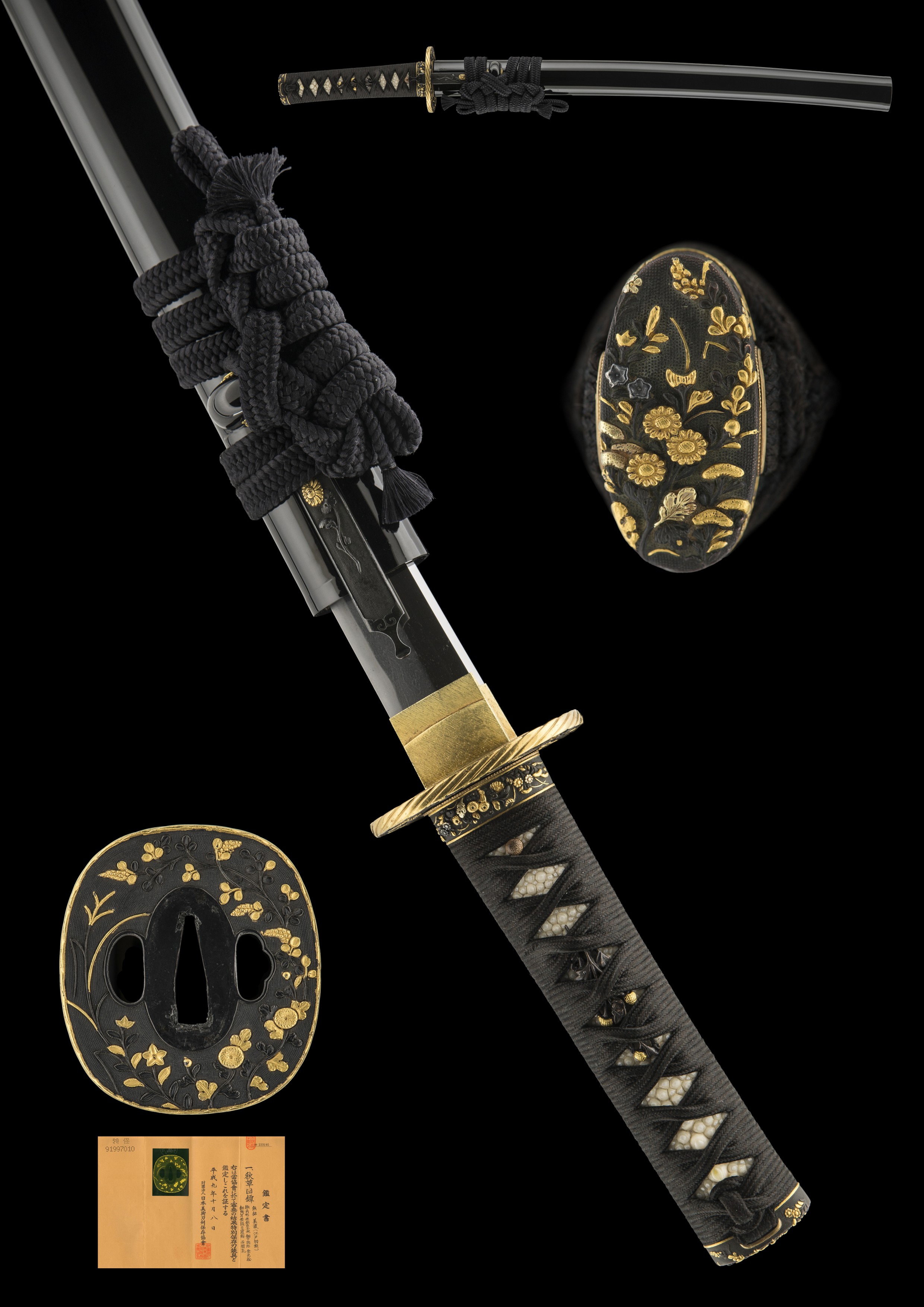
Shintô · Early Edo period (Keichô era)
A Hankei Wakizashi (繁慶)
A completed custom koshirae for this Saijô-saku Hankei wakizashi, built around a unified Mino school autumn leaves theme. The Mino school tsuba (NBTHK Tokubetsu Hozon) and shakudô fuchi-kashira with nanako ground in gold and silver relief (NBTHK Hozon) are complemented by Mino autumn leaves menuki and a signed Gotô Etsujô kozuka and kogai set with kaô (NTHK-NPO certified). Black ito on white samekawa.
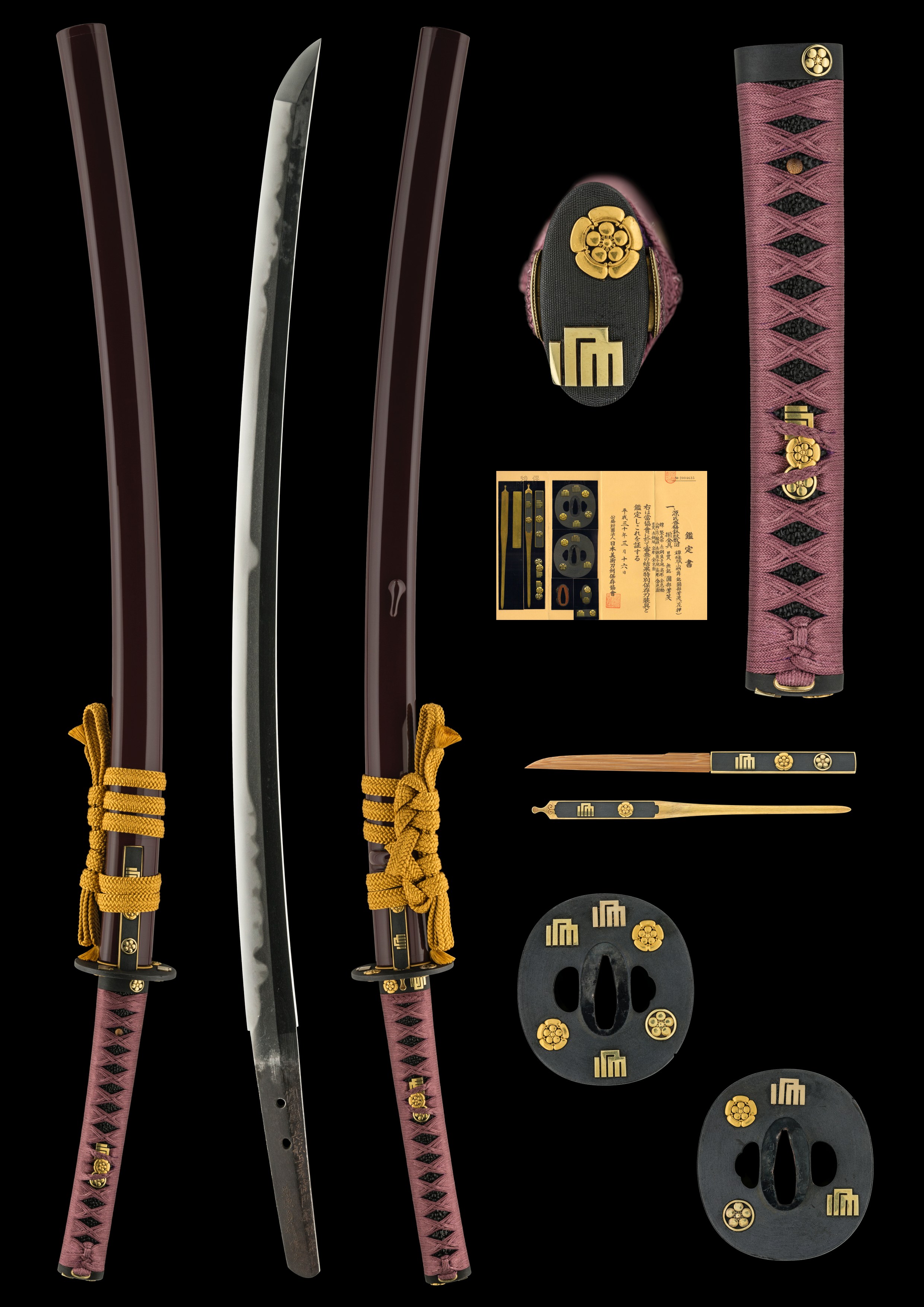
Sue-Kotô · Late Muromachi (Daiei era: 1521-1528)
A Yosôzaemon Sukesada Katana (与三左衛門尉祐定)
UJ completed a first-class custom koshirae for a sensational Yosôzaemon Sukesada Jûyô Katana. A full shakudô suite with nanako-ji, kin-iroe and Genji-kô kamon fittings by Sonobe Yoshihide over a deep gloss purple murasaki-urushi ronuri saya – NBTHK Tokubetsu Hozon fittings, NTHK-NPO certified koshirae.
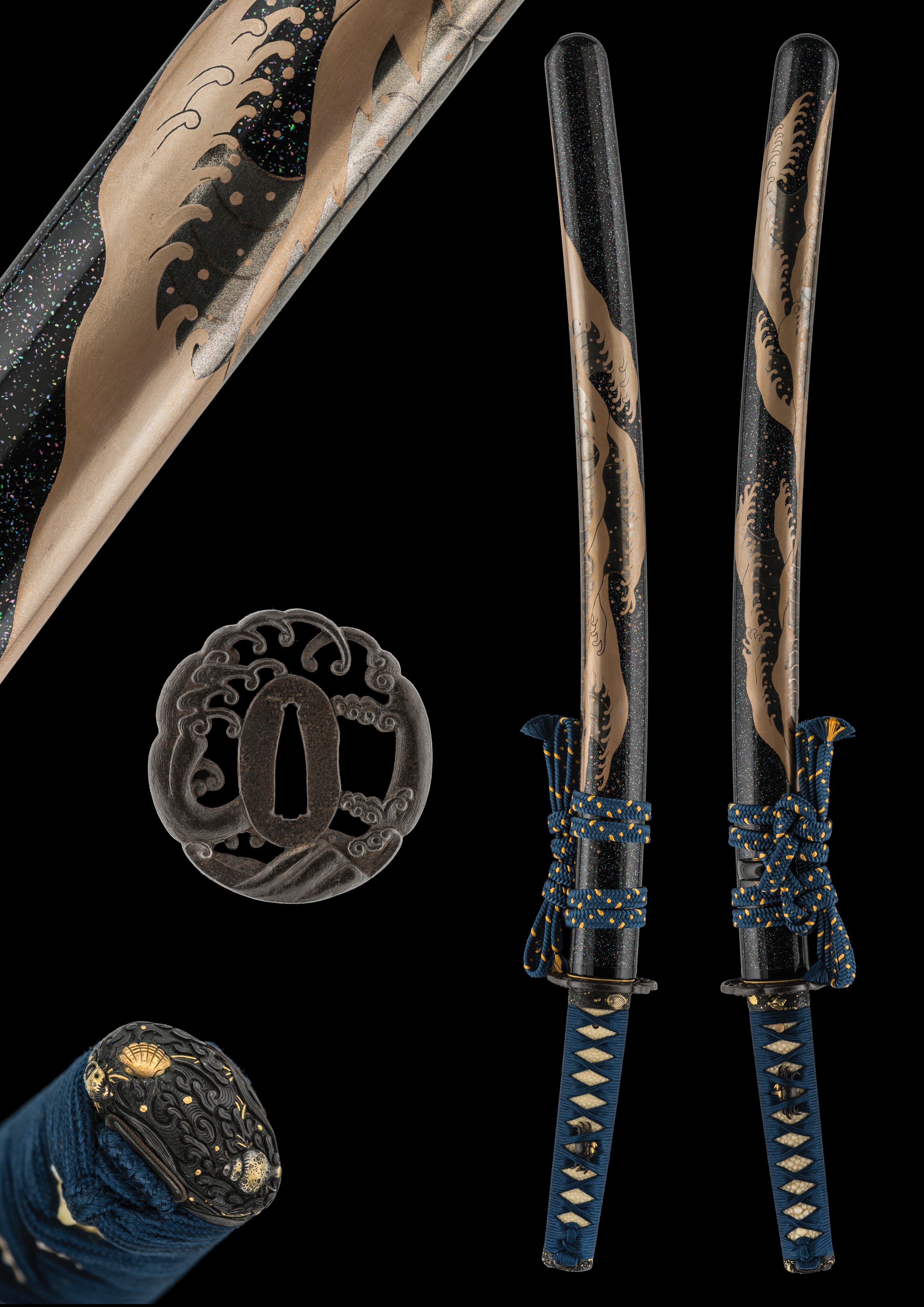
Kotô · Late Kamakura / Nanbokuchô period (c. 1312-1350)
A Motoshige Wakizashi (元重)
An ocean in lacquer – aogai-mijin-nuri saya with wave maki-e, shell fuchi-kashira, crab menuki and an iron wave tsuba signed Nobuyuki, all evoking the spirit of Hokusai's Great Wave. A fully unified hatô theme, NTHK-NPO certified, built for a 49th session Jûyô Tôken Motoshige blade.
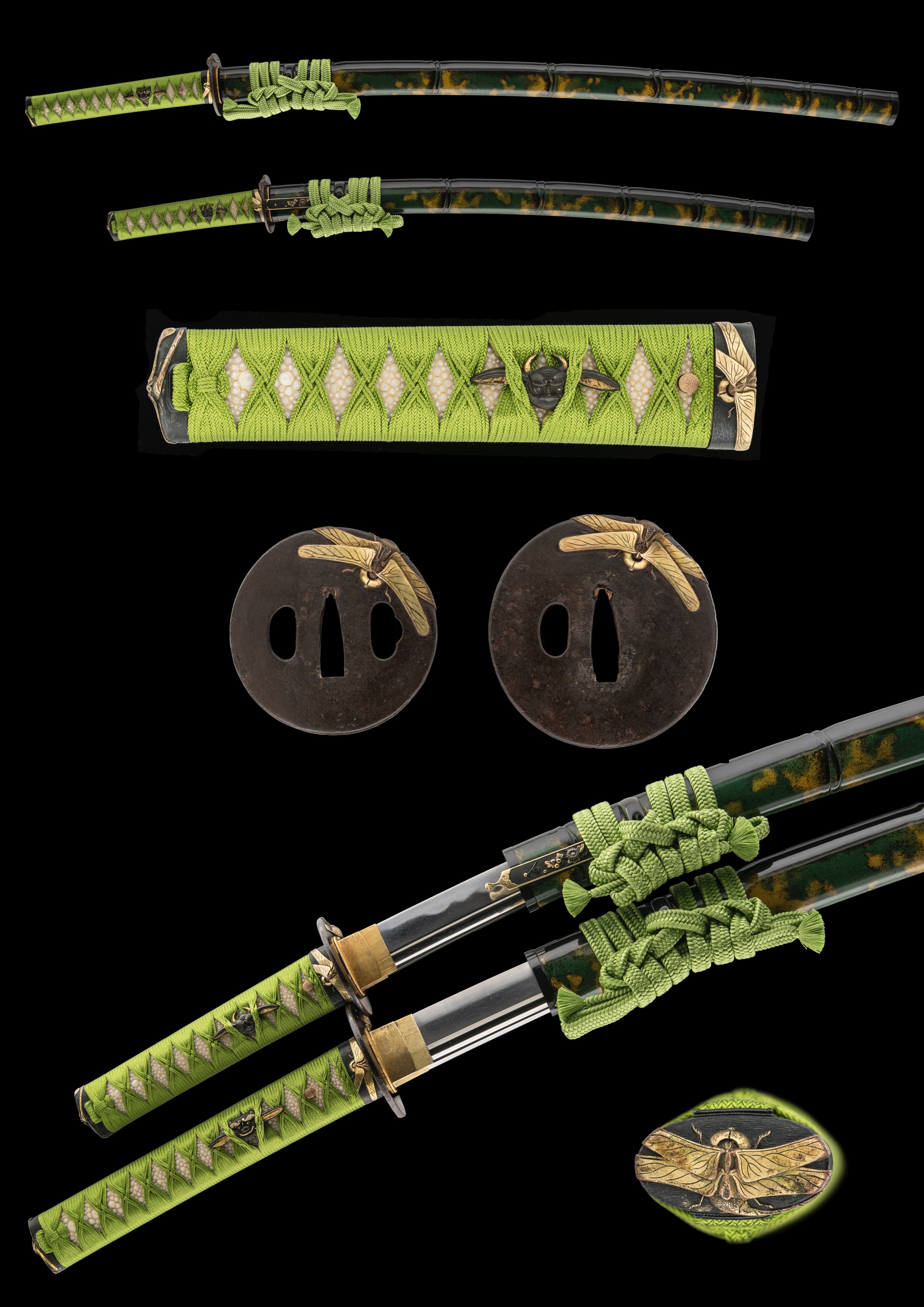
Kotô · Nanbokuchô period (Enbun era: 1356-1361)
An Omiya Morikage Daishô (大宮盛景)
The tombo, or dragonfly, was revered by Japanese warriors as the katsumushi, the insect of victory. It flies only forward, never wavering, the perfect emblem of samurai resolve. This daishô koshirae is devoted entirely to that symbolism. The sayas were shaped to evoke dragonfly legs, the iron tsuba carry gold dragonfly in high relief, and the lime-green braiding over dark gold-mottled lacquer is unlike anything else in the archive. More than two years in the making, paired with two Nanbokuchô Omiya Morikage blades bearing sayagaki by Dr. Kanzan Satô.
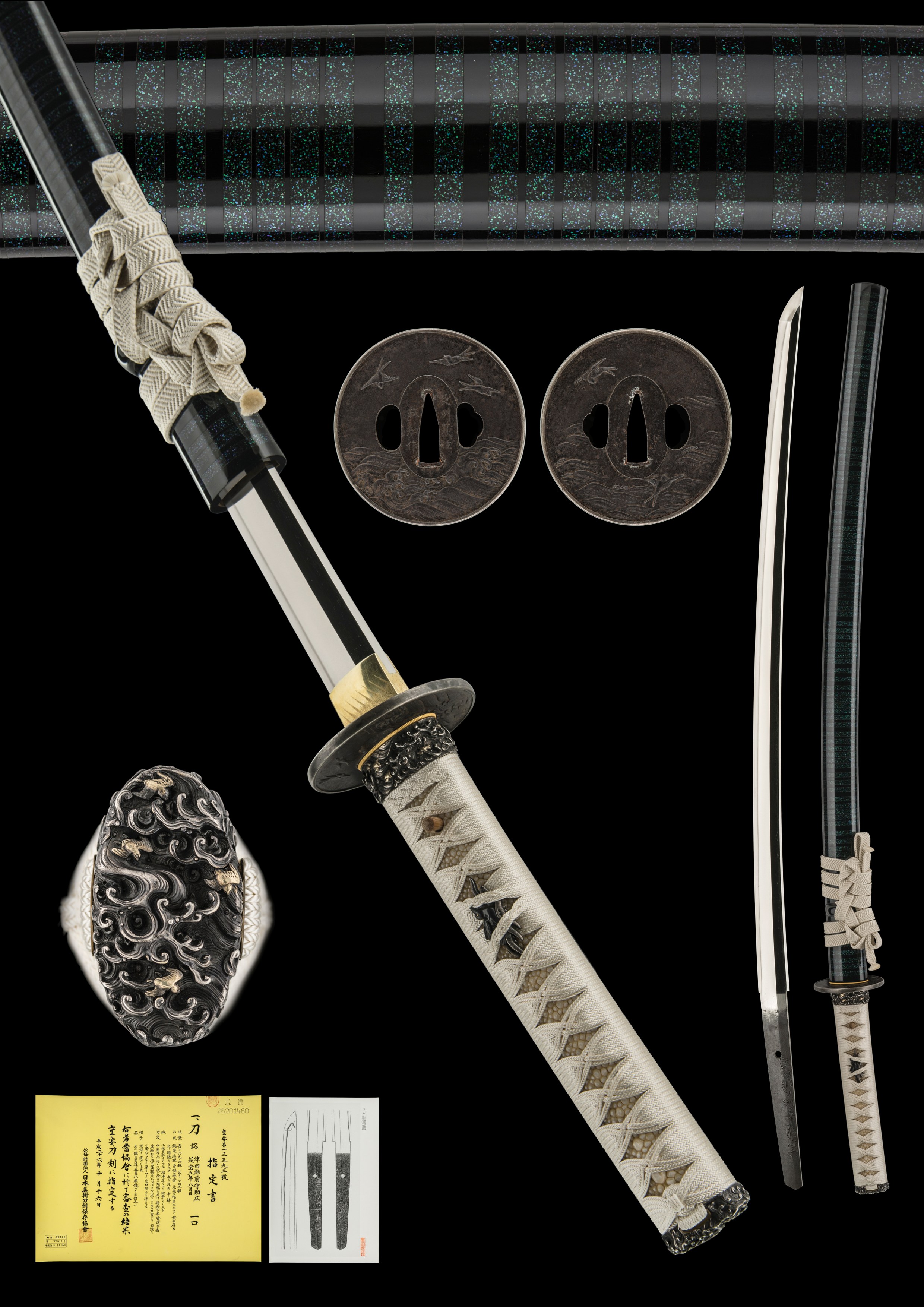
Shintô · Early Edo period (Enpô era: August 1677)
A Tsuda Echizen Sukehiro Katana (津田越前守助広)
Tsuda Echizen Sukehiro forged this katana in August 1677, listed in the Shinto Taikan and awarded 60th session Jûyô Tôken. The recently completed koshirae is built around a unified water theme. A Chôshû Masatomo tsuba (NBTHK Tokubetsu Hozon) shows geese over breaking waves. The shakudô fuchi-kashira carry extraordinary relief wave carving, and the saya is lacquered in shimmering kuro ishimeji-nuri that catches the light from every angle. A first-class koshirae for a first-class blade.
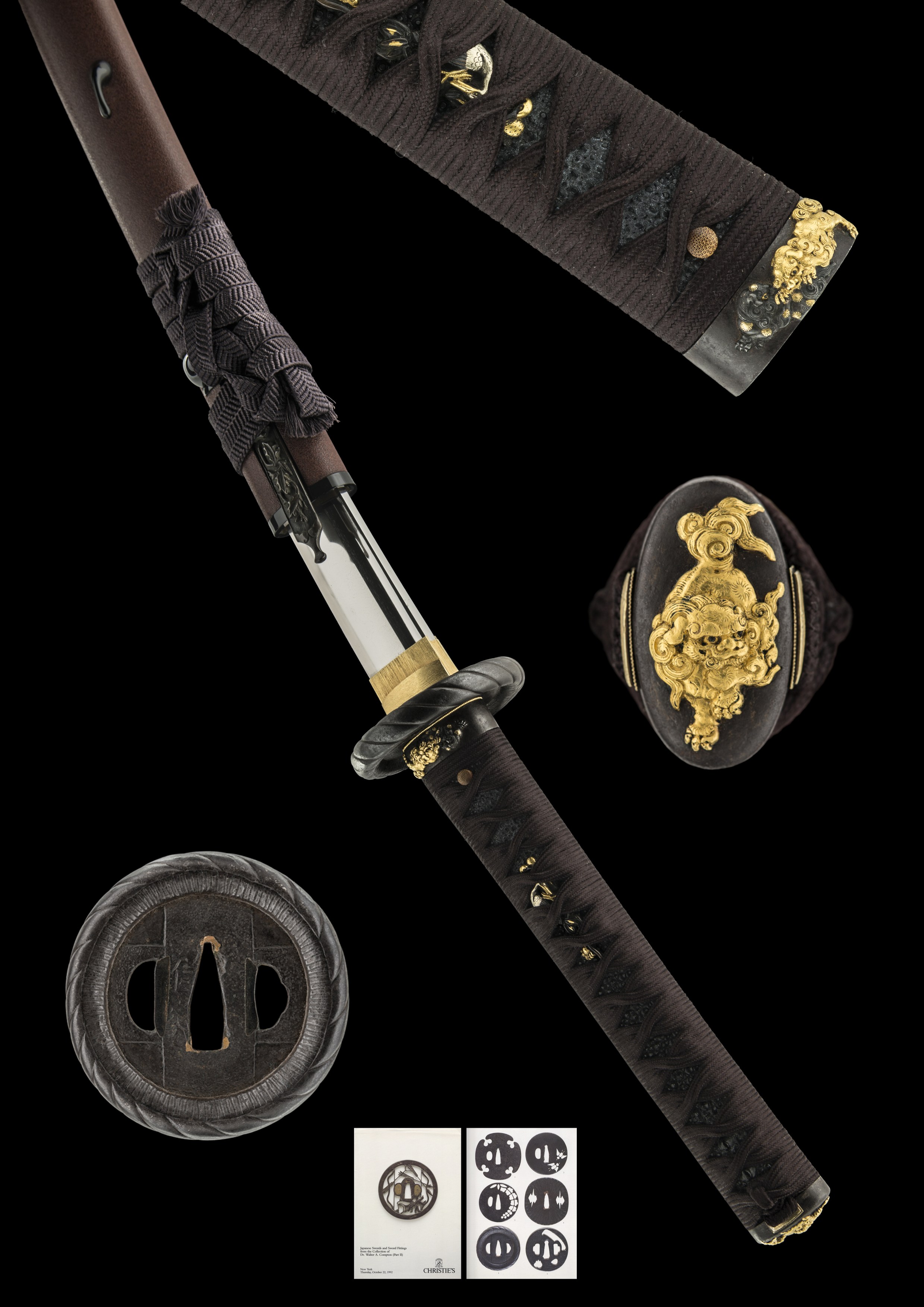
Kotô · Nanbokuchô period (Jôji era: 1362-1368)
A Rai Kuniyasu Katana (来国安)
Rai Kuniyasu moved from Yamashiro to Echizen where he founded the Chiyozuru school, and this 60th session Jûyô Tôken blade finally has a koshirae worthy of that standing. The centrepiece is an Owari Nobuie tsuba from the celebrated Walter A. Compton collection, its signature nawame rope-textured rim and cross design unmistakeable. Ishiguro Masayoshi fuchi-kashira with shishi in bold high relief, shakudô crane menuki, and a striking red ishimeji-nuri saya. This was custom koshirae was completed in 2022.
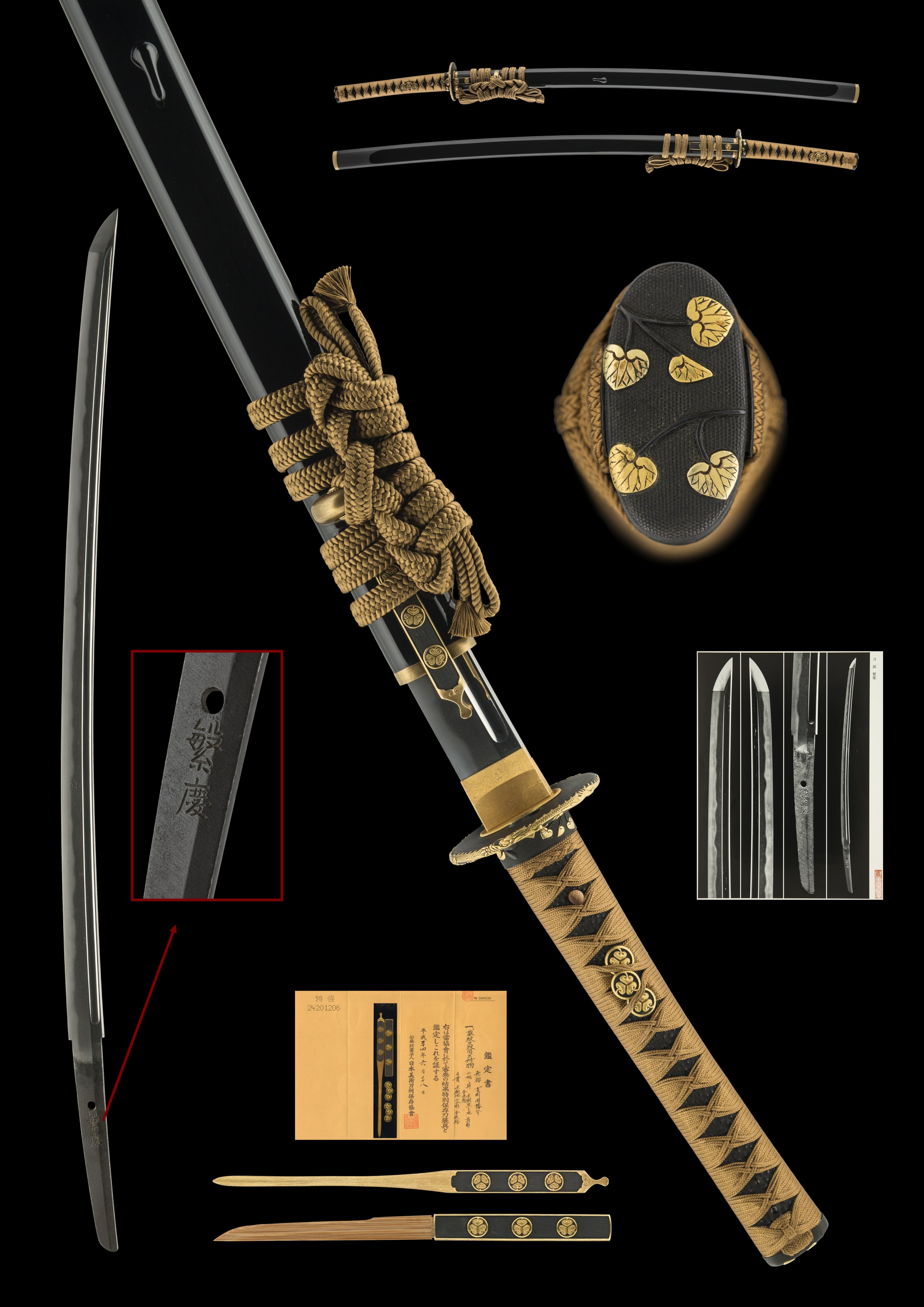
Shintô · Momoyama period (Keichô era: 1596-1615)
A Hankei Katana (繁慶)
Noda Hankei served as gunsmith to Tokugawa Ieyasu before becoming one of the pioneering Edo swordsmiths. This 23rd session Tokubetsu Jûyô blade wears a koshirae built entirely around that Tokugawa connection. The aoi-mon, the hollyhock crest of the Tokugawa family, runs throughout. Triple aoi-mon shakudô menuki, Yoshioka Inabanosuke fuchi-kashira (NBTHK Hozon), Yoshioka three-dragon tsuba (NBTHK Tokubetsu Hozon), and matching aoi-mon kozuka and kôgai, all in shakudô nanako. A deep glossy black roiro saya completes it. NTHK-NPO certified in 2022. A koshirae project with real historical depth.
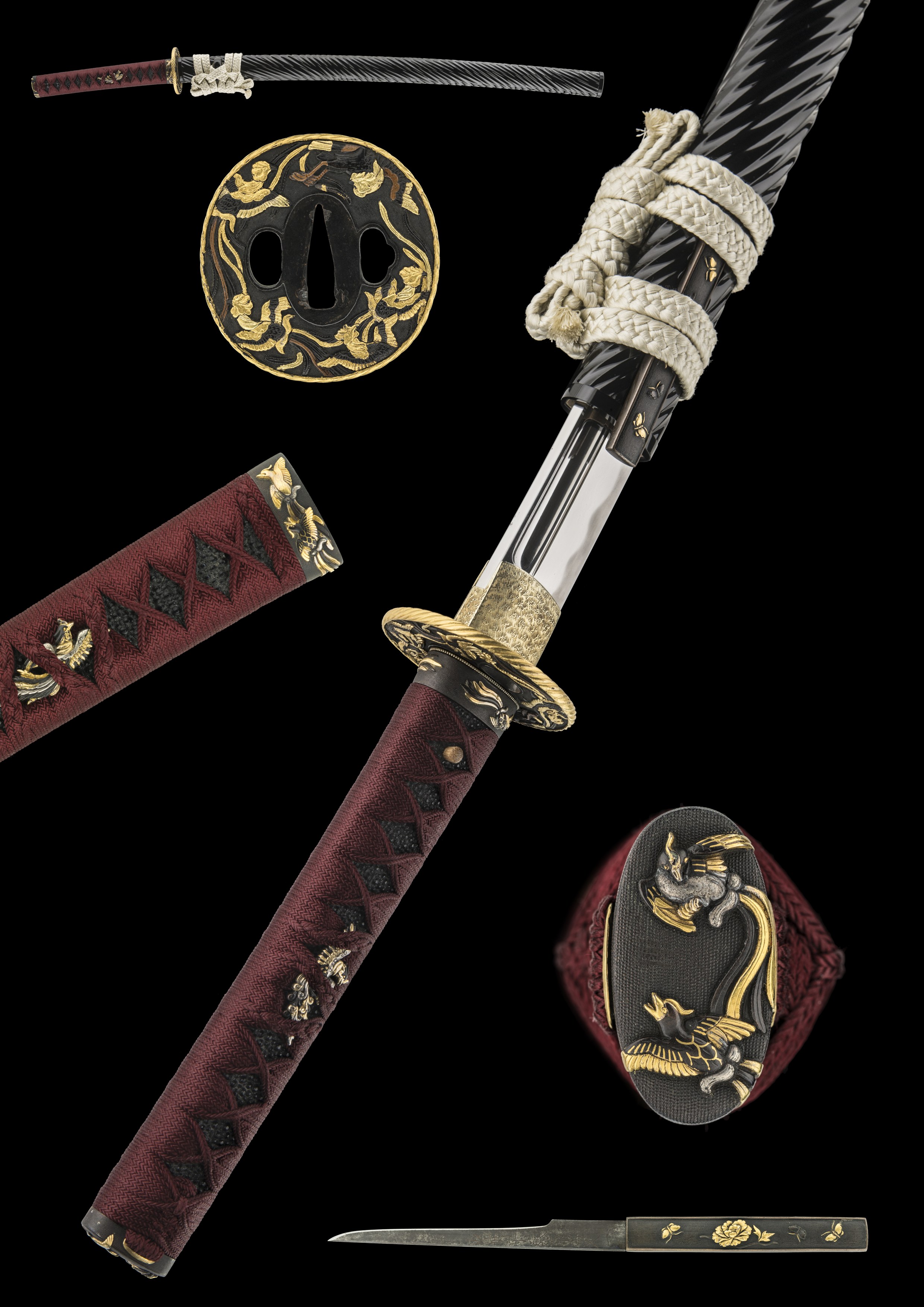
Shinshintô · Late Edo period (Kansei era: 1789-1801)
A Suishinshi Masahide Wakizashi (水心子正秀)
Suishinshi Masahide, one of the great Shinshintô pioneers, personally tested this wakizashi in February 1800 at Senju, severing through the chest to the base mound and also a skull. The blade bears his carved seal and his own hand in the inscription. A sword proven by its maker. The koshirae is built entirely around the hôô, the rising phoenix, in tribute to that intensity. Gotô Injô fuchi-kashira and matching shakudô nanako phoenix throughout, a diagonally grooved saya in deep glossy black with deep red jabaramaki braiding. NTHK-NPO certified in 2023.
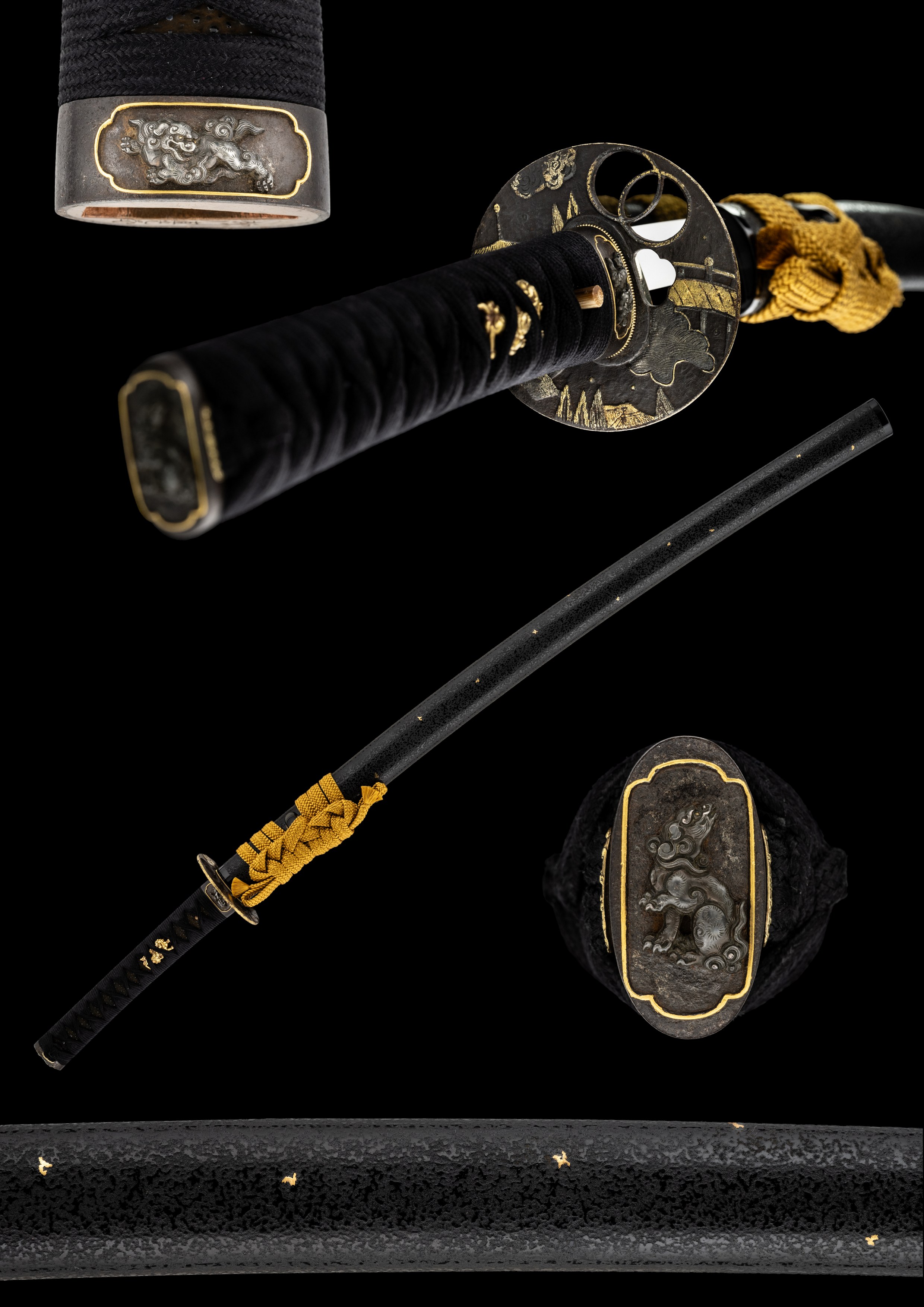
Shintô · Early Edo period (Kanbun era: 1661-1673)
A Higo no Kami Kuniyasu Katana (肥後守国康)
A black kuro-ro-ishime saya scattered with gold maki-e dots – that image stays with you. This is the custom koshirae built for the ô-wazamono Kuniyasu of Catalogue 43, with Tanobe-sensei sayagaki, and every element was chosen to honour the blade. Yanagawa Naomitsu fuchi-kashira (NBTHK Tokubetsu Hozon) with shishi lion in dramatically raised posture, scholars have likened it to a Hokusai composition. Kamakura school iron tsuba in gold pagoda and bridge inlay with wachigai-mon openwork (NBTHK Tokubetsu Hozon). Solid gold Gotô school shishi menuki (NBTHK Tokubetsu Hozon). NTHK-NPO koshirae certified January 2026. Four Tokubetsu Hozon certificates in a single ensemble.
Kotô · Late Heian ~ Kamakura period
A Ko-Naminohira Tachi (古波平)
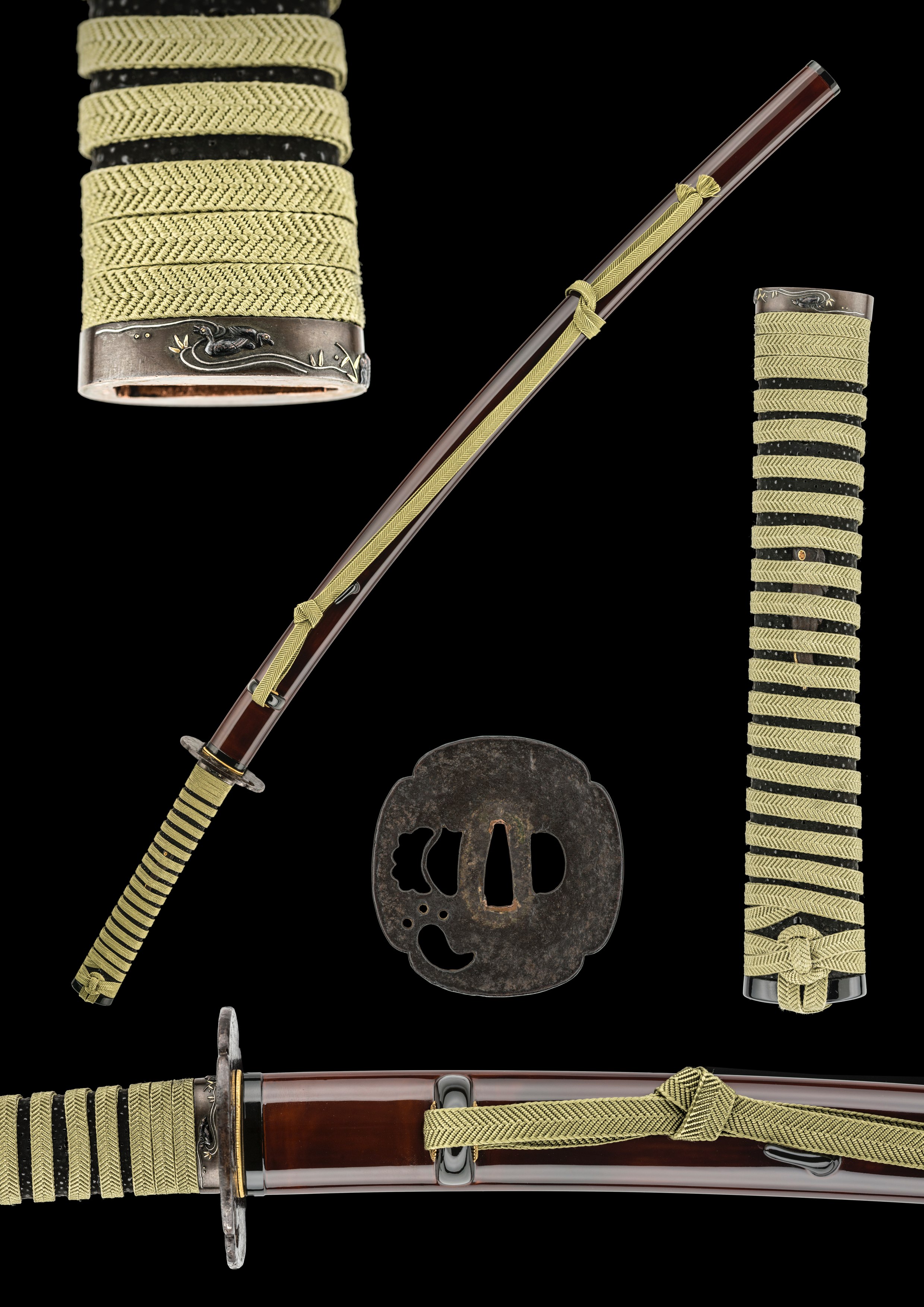
The Akechi-koshirae takes its name from Akechi Mitsuhide, the warlord who turned on Oda Nobunaga at Honnôji in 1582. His Tenshô-era koshirae, now at the Tokyo National Museum, is the template for this extraordinary project built for a Ko-Naminohira tachi. The deep aka-urumi-nuri saya in red gloss lacquer is already developing the gentle transparency that defines the original – the craftsmen deliberately designed the lacquer layers to age in exactly this way over time. The tsukamaki is the Akechi-specific katatemaki with moegi braids wrapped with a gap and lacquered to hold their position. Shibuichi fuchi-kashira with mandarin duck, iron salmon menuki, and a chôji openwork iron tsuba. Completed in 2019.
Kotô · Nanbokuchô period (Jôji era: c. 1366-1388)
A Kanenaga Katana (兼長)
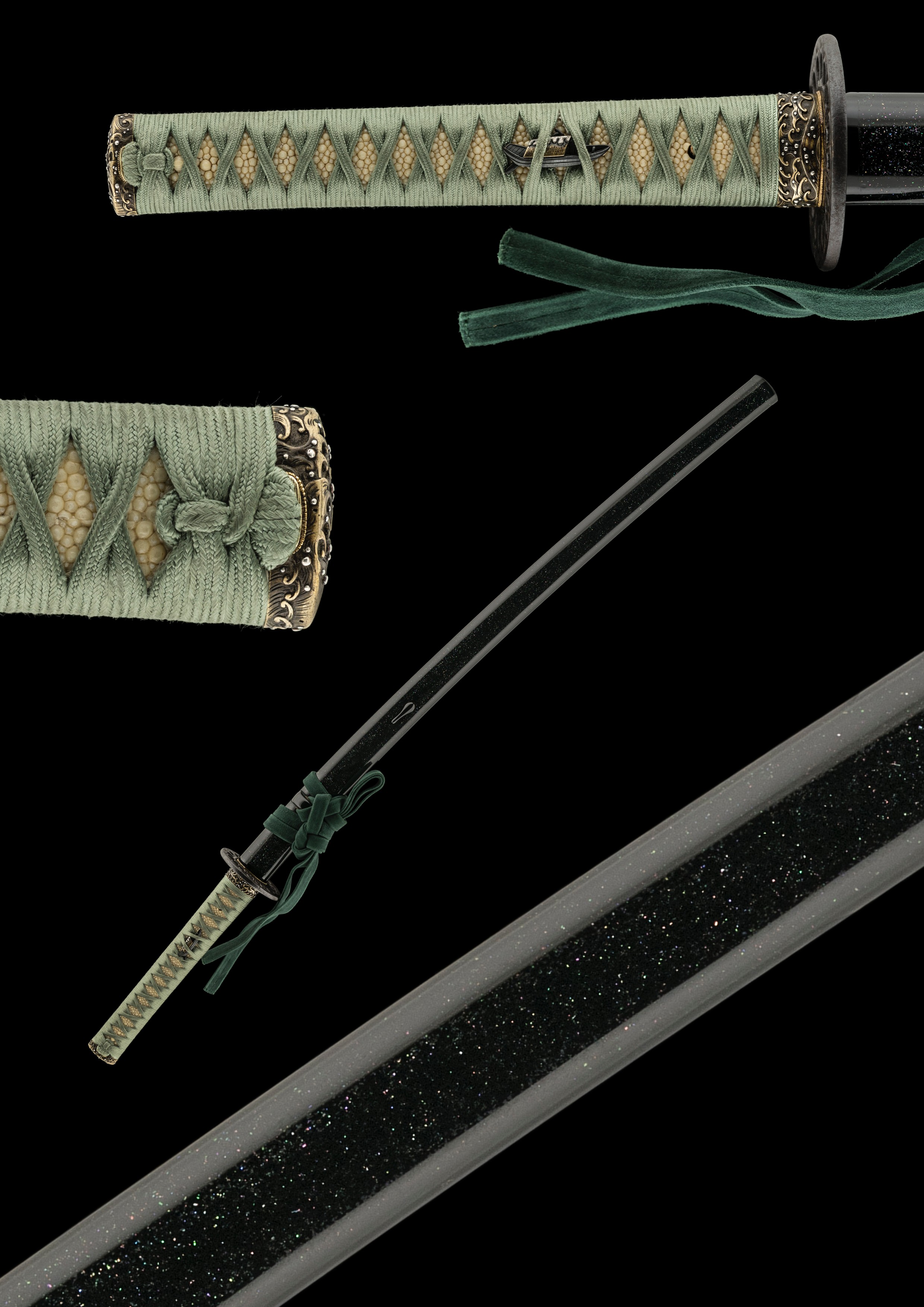
The saya of this koshirae is unlike any other in the archive. Black gloss lacquer set with aoi-gai abalone fragments creates a literal night sky – thousands of iridescent points of light that shift and shimmer as the sword moves. The theme is gazing at the stars, and the fittings carry the full story. The fuchi-kashira depict crashing ocean waves in finely detailed high relief, and the menuki are small vessels adrift on dark water. Ocean, night sky, boats crossing between them – a complete celestial seascape. Built for a 37th session Jûyô Tôken blade attributed to Kanenaga of the Chôgi group, one of the great Nanbokuchô masters. NTHK-NPO certified.
Kotô · Late Kamakura period (Gentoku era: 1329-1331)
A Niô Kiyotsuna Katana (二王清綱)
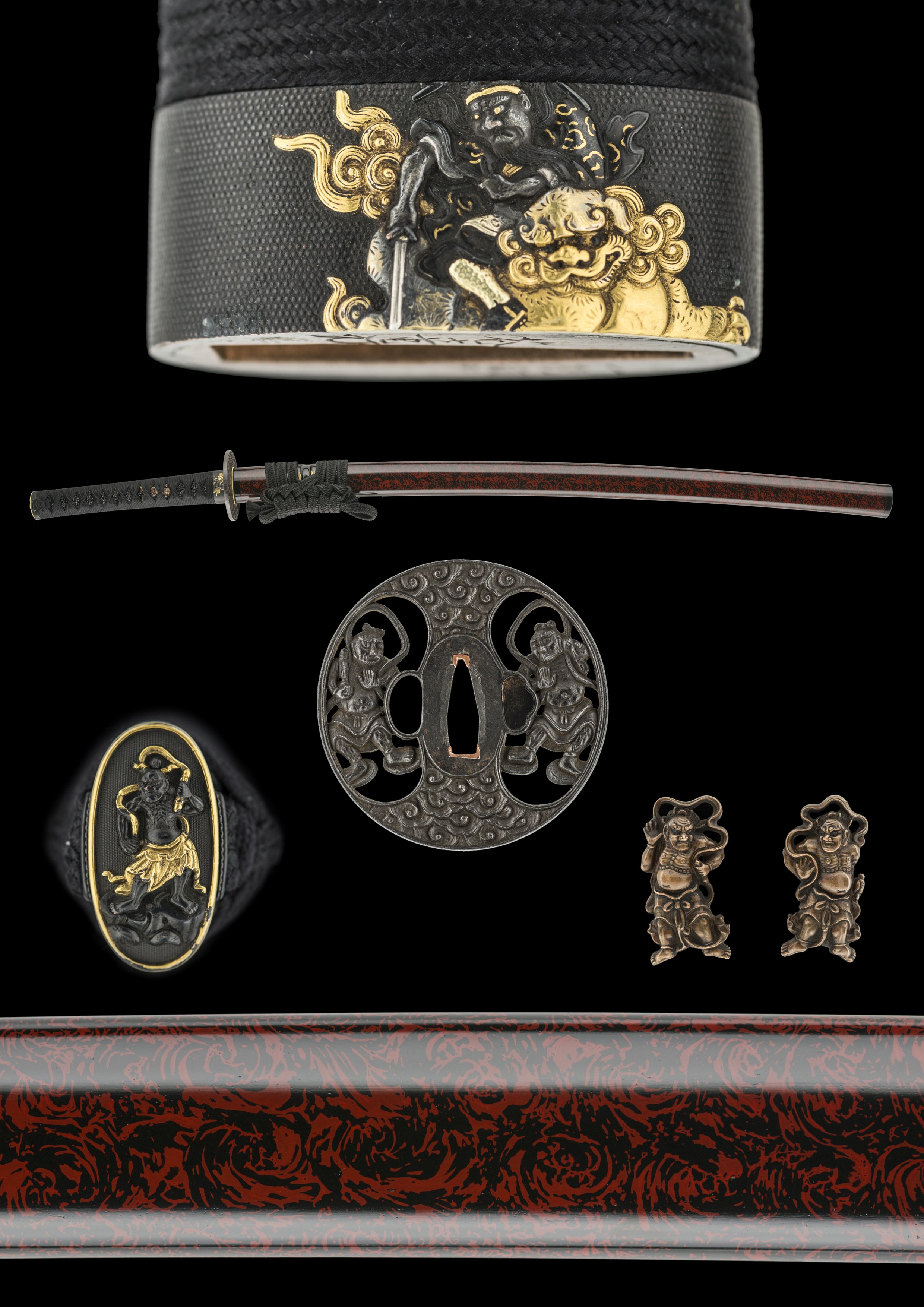
The Niô school takes its name from the benevolent guardian kings of Buddhism, and this koshirae was built to honour exactly that. Niô guardian figures in dramatic iron openwork command the tsuba, standing in powerful posture on either side of the blade. Shoki, the great demon-slaying general of Chinese legend, occupies the kashira in gold iroe against a dark nanako ground, subjugating evil on the owner's behalf. Yokoya school Niô menuki complete the guardian assembly. The saya is lacquered in a spectacular zen whirlpool design in deep red and black, an interlocking pattern of spiritual energy covering every surface. A complete statement of Buddhist protection, built for the 52nd session Jûyô Tôken Niô Kiyotsuna of Catalogue 31.
Shinshintô · Late Edo period (Bunkyû era: 1864)
A Norikatsu Katana (勝村徳勝)
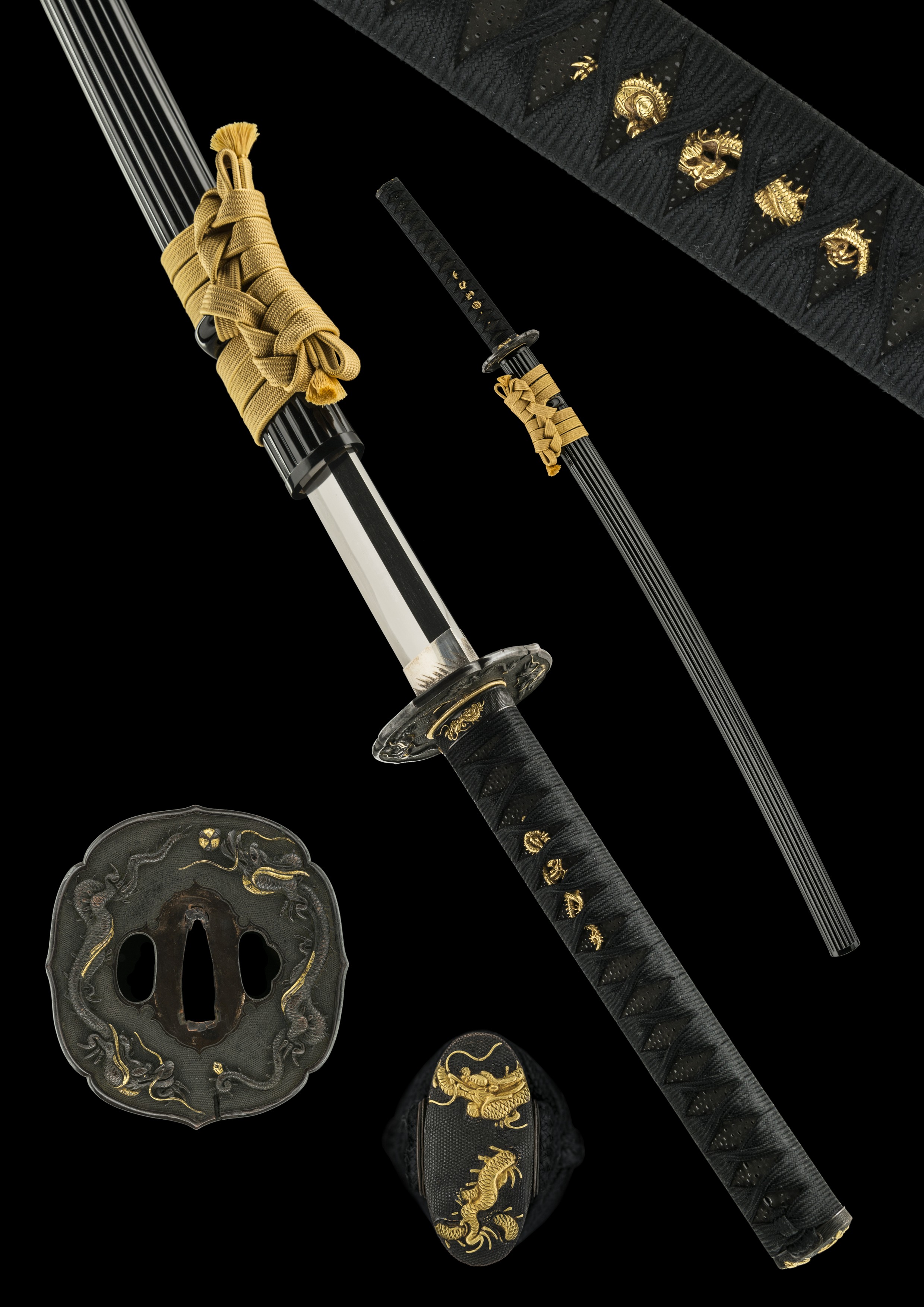
Katsumura Norikatsu forged this katana in Mito in February 1864 with a remarkable masame-hada, the straight grain that runs through the steel like wood. The koshirae takes that as its starting point. The saya is lacquered in deep glossy black with long vertical grooves cut into the surface, a direct visual echo of the masame running through the blade itself. From there, dragons take over every fitting. Shakudô nanako fuchi-kashira with gold accents depict dragons diving into sand. Gold crawling dragon menuki grip the tsuka. A shakudô aoi-gata tsuba carries ascending and descending dragons in high relief. If you love dragons, there is nothing else quite like this in the archive. Completed in 2020.