
ITEM# UJKA518 – Available
A Nidai Kinmichi Katana (伊賀守藤原金道)

- NBTHK Tokubetsu Hozon
- Shintô, Manji era (1658~1661)
- Nidai Kinmichi, Mishina school, Yamashiro
- Chûjô-saku
- Wazamono
- Nagasa 69.1cm
- Wide gunome-midare with kinsuji, sunagashi, yahazu-ba
- Tanobe-sensei sayagaki

This confident shintô katana was forged by the second generation Kinmichi, head of the Mishina school of Kyôto, Japan’s cultural capital, and holder of the title Nihon Kaji Sôshô, the highest honour a swordsmith could attain. He signed it beside a sixteen petal kiku-mon chrysanthemum. A recognized wazamono maker with Mino roots, he forged a wide gunome-midare mixed with hako-midare, rich in nie with kinsuji, sunagashi and even yahazu-ba, and closed it with the family’s trademark Mishina-bôshi. Tanobe-sensei‘s sayagaki praises its “strong sense of movement”. The sparkling aogai-mijin-nuri koshirae carries a Genpei War motif and Minamoto Yorimitsu subduing the ogre Shuten-dôji. From blade to koshirae, this is a samurai sword worthy of the family that armed the Tokugawa at the Siege of Ôsaka.
From the PDF description
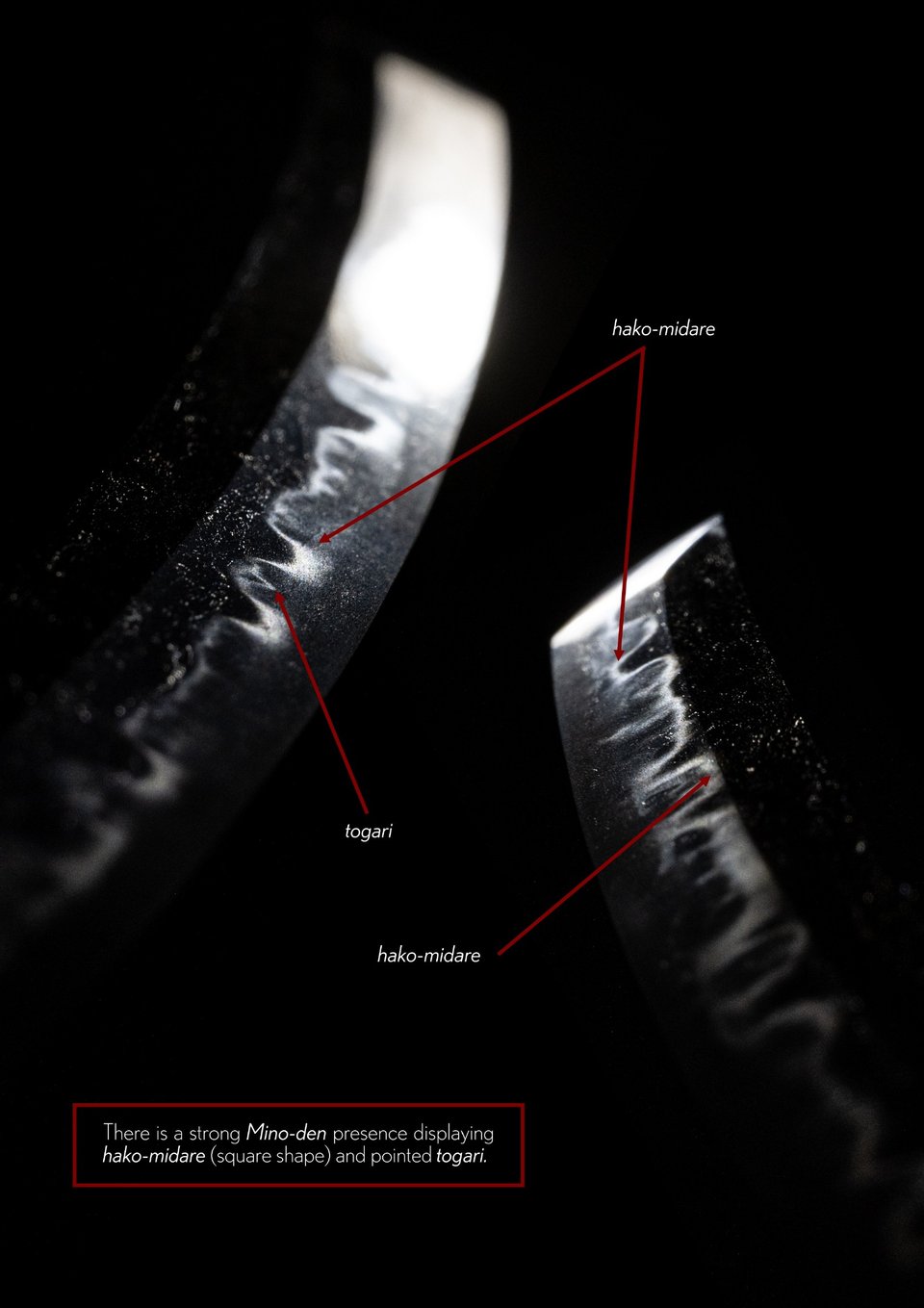
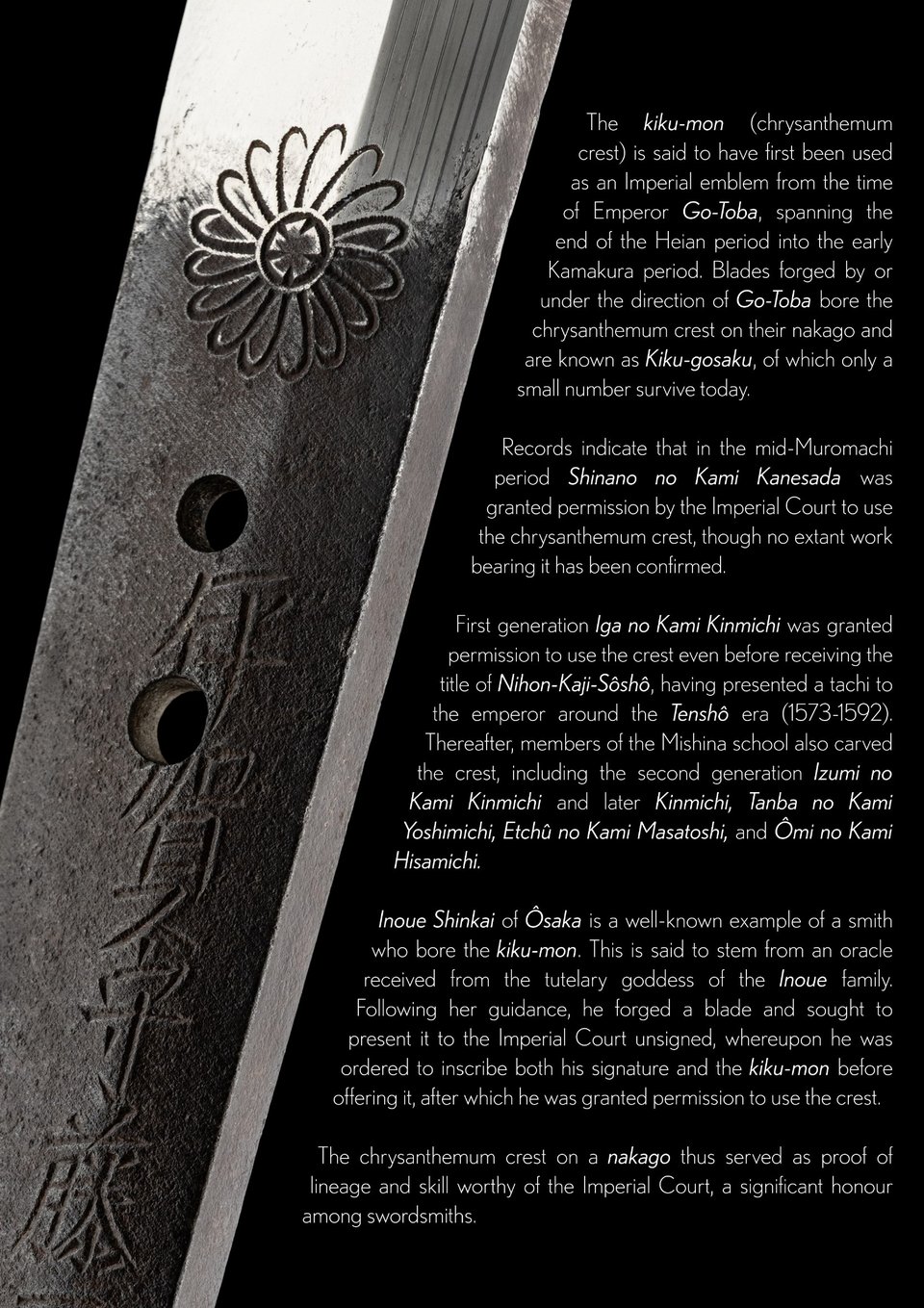
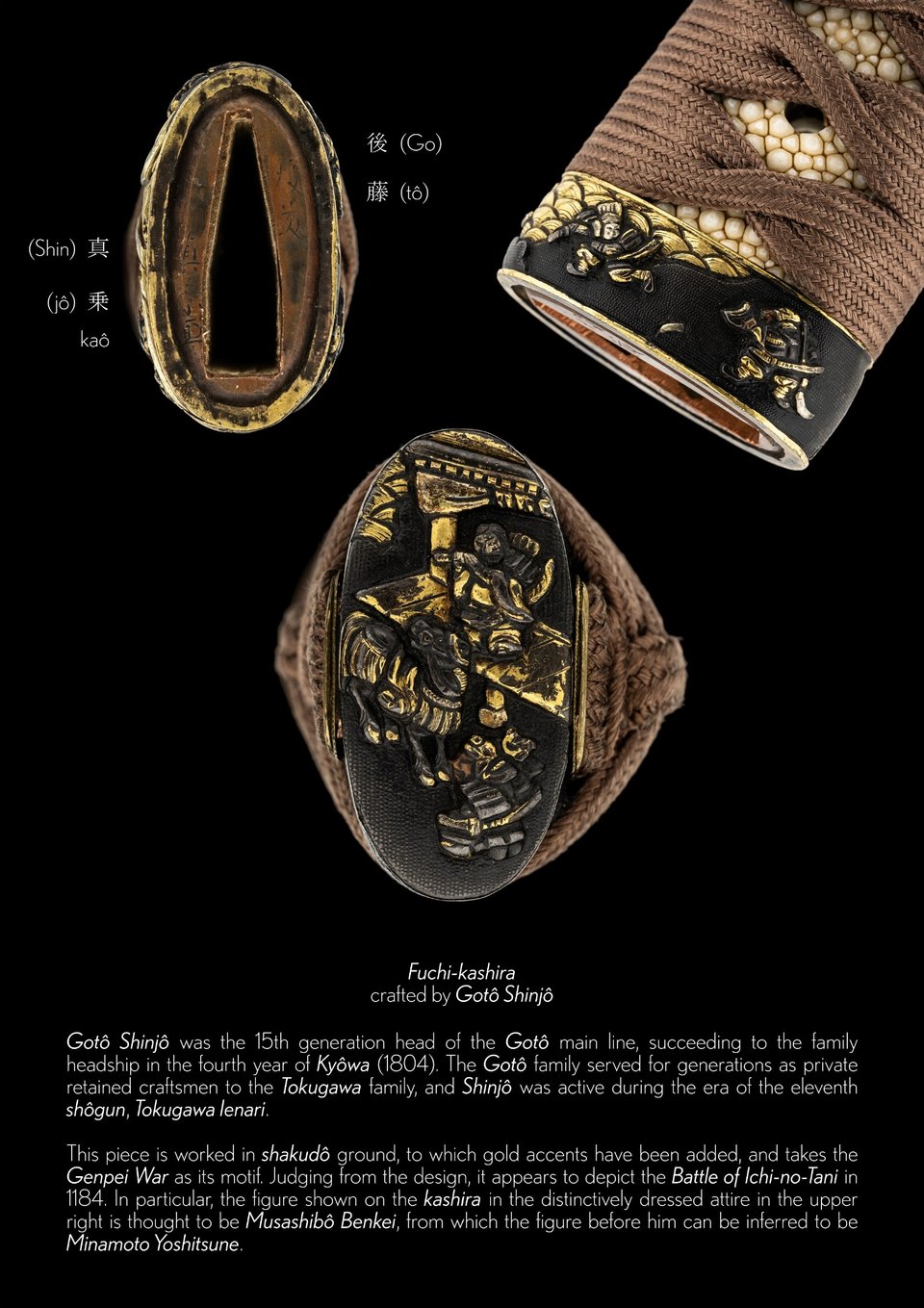
The full PDF description runs to 29 pages and adds macro photography of the hamon, translations of the nakago signature, sayagaki and NBTHK certificate, plus the history behind the Mishina school, the kirikomi, the Shuten-dôji tsuba and the Genpei War fuchi-kashira.
Blade
| Item Number | UJKA518 |
| Sword Type | Katana |
| Swordsmith | Nidai Kinmichi |
| Swordsmith (JP) | 伊賀守藤原金道 |
| Signature | Iga no Kami Fujiwara Kinmichi, beside a kiku-mon crest; reverse: Nihon Kaji Sôshô |
| Fujishiro Rank | Chûjô-saku (an above average smith) |
| Sharpness Rating | Wazamono |
| School | Mishina |
| Province | Yamashiro (Kyôto) |
| Period | Shintô, Edo period (Manji era: 1658~1661) |
| Nagasa | 69.1cm (ubu) |
| Sori | 1.6cm |
| Moto-haba | 3.07cm |
| Weight | 775g |
| Nakago | Ubu (original, unaltered), katte-sagari-yasurime, kiku-mon crest, two mekugi-ana |
| Jihada | Ko-itame mixed with mokume, nagare-hada in places, ji-nie and plenty of chikei |
| Hamon | Kyô-yakidashi rising into a wide gunome-midare mixed with hako-midare, reaching the shinogi in places, with thick nie, kinsuji, sunagashi and yahazu-ba |
| Boshi | Mishina-bôshi |
Koshirae
| Koshirae | Kuro-iro aogai-mijin-nuri-saya uchigatana-koshirae, black lacquer with mother-of-pearl, Modern period |
| Tsuba | Iron, Ôeyama no zu (Minamoto Yorimitsu subduing the ogre Shuten-dôji), around the Meiji era; NTHK-NPO Kanteishô |
| Fuchi-kashira | Gotô Shinjô, shakudo ground with gold accents, Genpei War motif; NTHK-NPO Kanteishô |
| Menuki | Genpei War motif, en suite with the fuchi-kashira |
| Tsuka | Brown tsuka-ito in hishi-maki style over aged samegawa |
| Habaki | Two-toned gold on a copper base |
Certificates and Sayagaki
| Certificates | NBTHK Tokubetsu Hozon, issued in the twenty-third year of Heisei era (June 2011); NTHK-NPO Kanteishô for the koshirae, fuchi-kashira and tsuba |
| Sayagaki | Inscribed on the shirasaya by Tanobe-sensei (Tanobe Michihiro), Nidai Kinmichi, dated spring of the eighth year of Reiwa era (2026) |
What’s included
| Includes | Shirasaya, aogai koshirae, fabric bags, sword care kit, printed and bound copy of this PDF description |